Whales: Giants of the Ocean

Whales: Giants of the Ocean

Whales are among the largest and most remarkable animals on Earth. These marine mammals live in oceans around the world, from warm tropical waters to the cold seas surrounding the poles.

Life Beneath the Surface

Although whales spend their lives in water, they breathe air through blowholes located on top of their heads. They must regularly return to the surface to breathe before diving again in search of food or traveling through the ocean.

Whales are warm-blooded, give birth to live young, and nurse their calves with milk. A thick layer of fat called blubber helps protect them from cold water and stores energy during long migrations.

Two Main Groups

Whales are generally divided into baleen whales and toothed whales. Baleen whales filter small animals from the water using flexible plates inside their mouths. This group includes blue whales, humpback whales, and gray whales.

Toothed whales use teeth to catch fish, squid, and other prey. Many of them also use echolocation, producing sounds and listening for returning echoes to understand their surroundings. Sperm whales, belugas, and orcas belong to this group.

The Blue Whale

The blue whale is the largest known animal to have ever lived. An adult can grow longer than a city bus and weigh well over one hundred tonnes. Despite its enormous size, it feeds mainly on tiny crustaceans called krill.

Communication and Migration

Whales communicate using clicks, whistles, pulses, and complex songs. Some sounds can travel across great distances underwater. Humpback whales are especially famous for their long, patterned songs.

Many species migrate thousands of kilometres each year. They often feed in cold, nutrient-rich waters before traveling to warmer regions where they mate and give birth.

Protecting Whales

Commercial hunting once caused severe declines in many whale populations. Today, whales also face threats from fishing gear, ship collisions, underwater noise, pollution, and changes to ocean ecosystems.

Conservation programs, safer fishing practices, protected habitats, and international cooperation can help whale populations recover. Protecting whales also supports healthier oceans because these animals play an important role in marine food webs and nutrient cycles.

GDS Showcases Ship Engine Room Simulation Technologies at TEKNOFEST Mavi Vatan 2026

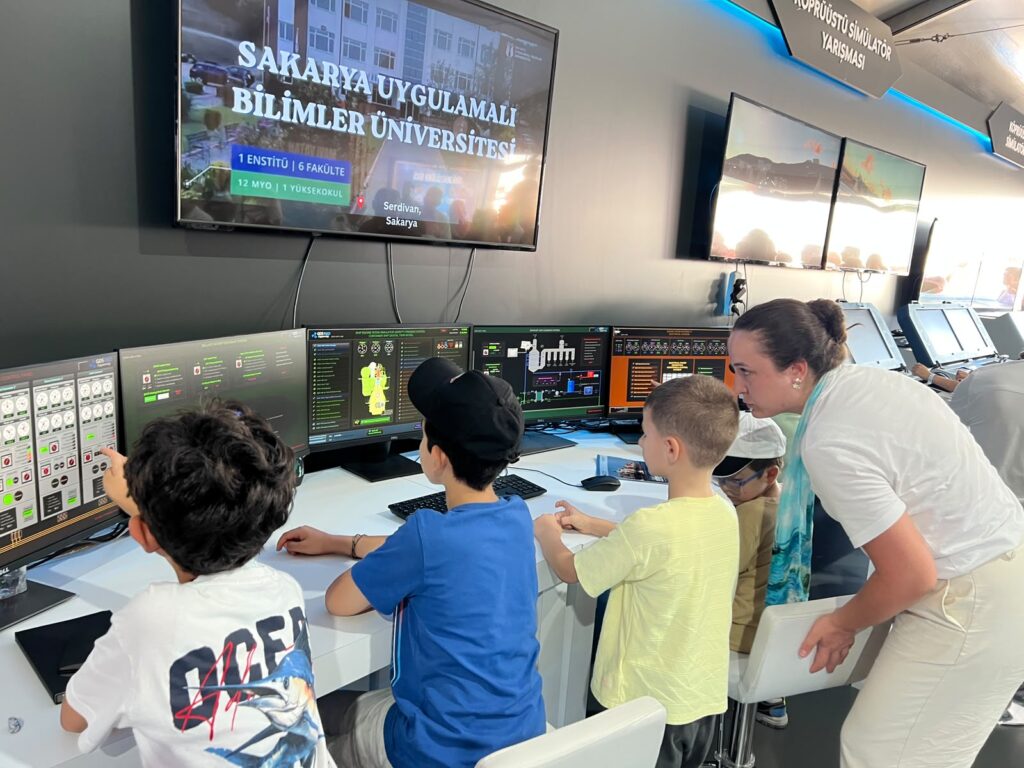
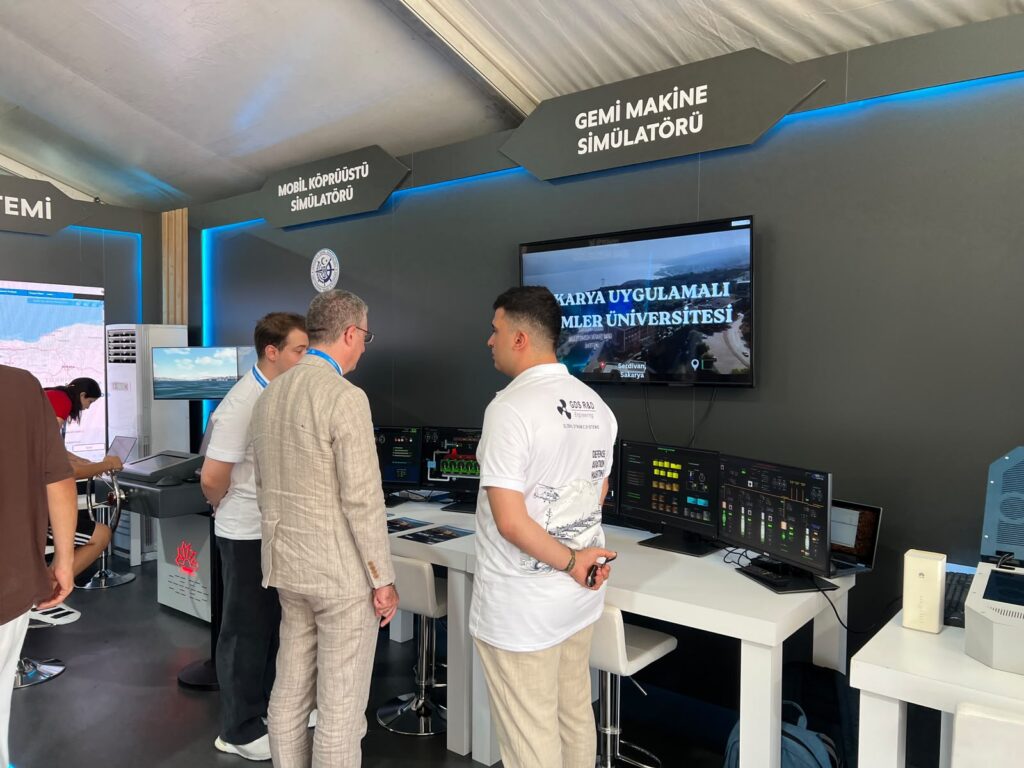
GDS Engineering R&D is taking part in TEKNOFEST Mavi Vatan 2026 at Gölcük Tersanesi Komutanlığı, presenting its ship engine room simulation technologies at the Ministry of Transport and Infrastructure exhibition area.

Held between 20–23 August 2026, TEKNOFEST Mavi Vatan brings together maritime technologies, naval platforms, engineering applications and young technology enthusiasts in one of Türkiye’s most important naval centres.

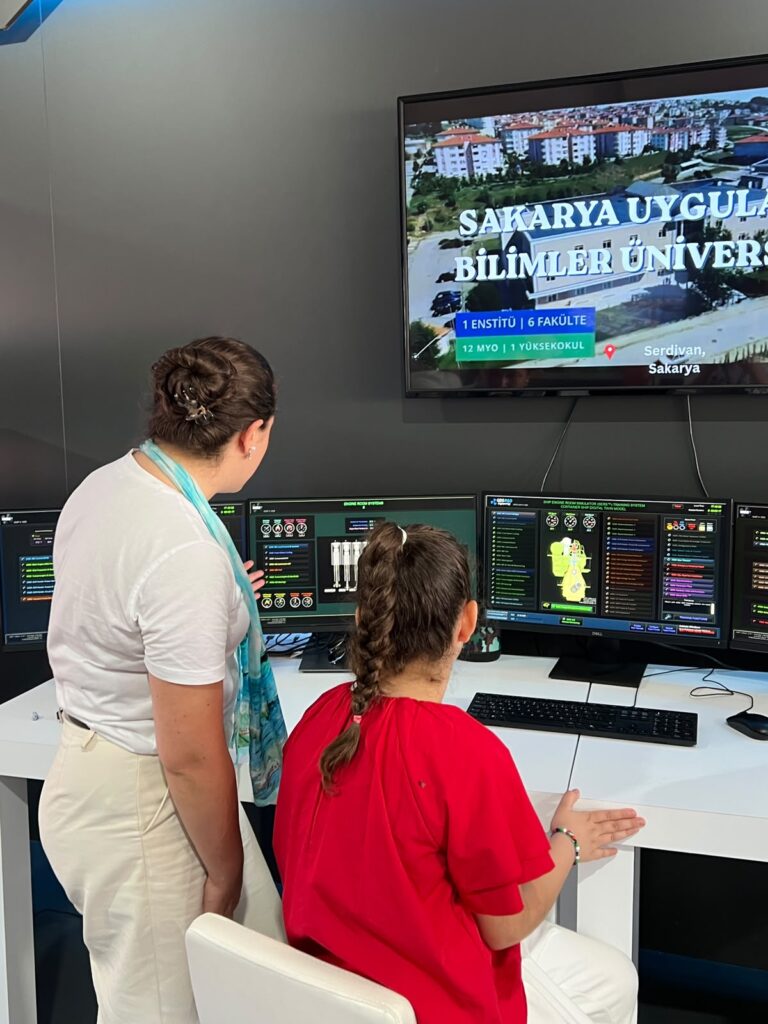
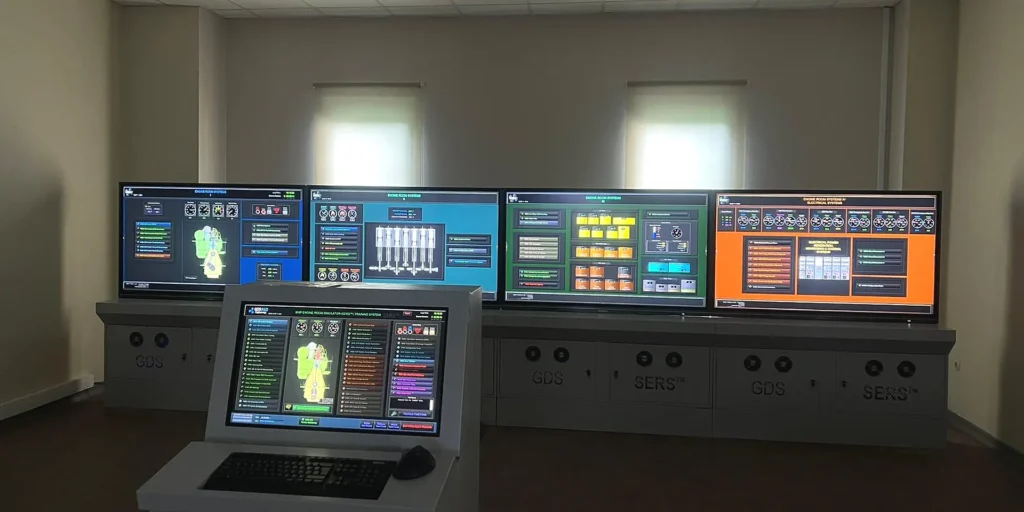
During the event, GDS is introducing visitors to its Ship Engine Room Simulator (SERS™) and demonstrating how simulator-based training can be used to support marine engineering education.

SERS™ provides a realistic training environment in which marine engineering students and professionals can become familiar with engine room systems, operational procedures, equipment interactions and different operating scenarios without the limitations and risks of training solely on board a vessel.

At the Ministry of Transport and Infrastructure exhibition area, visitors have the opportunity to see the simulator in operation, explore its interfaces and learn more about the role of simulation technologies in modern maritime education and training.

For GDS, participation in TEKNOFEST Mavi Vatan is also an opportunity to meet students, maritime professionals, educators and representatives from the wider maritime sector, and to exchange ideas on the future of marine engineering training.

We are pleased to be part of TEKNOFEST Mavi Vatan 2026 in Gölcük and to introduce our maritime simulation technologies to the next generation of engineers and maritime professionals.

A High g-Rating Can Be Misleading: Here’s Why

It is increasingly common to see industrial and electronic equipment promoted with statements such as “withstands 7.7 g vibration,” “tested to 9 g,” or “high-g resistant.”

Although such figures may be part of a valid qualification test, a g-value by itself does not describe the mechanical load acting on a product and is not sufficient to compare the ruggedness of two different systems.

The first point is fundamental mechanics: F=m×a

where F is force, m is mass and a is acceleration.

The unit g expresses acceleration relative to gravitational acceleration: 1g≈9.81 m/s2

Therefore, saying that a product experiences 9 g describes its acceleration — not the force acting on its structure.

Mass Changes the Mechanical Load

Consider a simple example.

A 1 gram component exposed to 250 g produces an inertial force of approximately: F=0.001×250×9.81≈2.45 N

Now consider a 10 kg equipment assembly exposed to only 9 g: F=10×9×9.81≈883 N

The acceleration is dramatically lower in the second example, yet the resulting inertial force is hundreds of times greater.

This is why an impressive-looking “high-g” number cannot be interpreted independently of the mass and mechanical configuration of the equipment.

Vibration Is More Than a g-Value

Mass is only the beginning.

For sinusoidal vibration, acceleration is related to displacement and frequency by: a=(2πf)2x

This relationship shows that the same acceleration level can represent completely different mechanical motions at different frequencies.

For example, approximately 7.7 g at 10 Hz corresponds to about 19 mm of displacement amplitude, while the same 7.7 g at 100 Hz corresponds to only about 0.19 mm.

Therefore, a statement such as “tested at 7.7 g” is incomplete unless parameters such as frequency range, vibration spectrum, duration, axis, fixture/mounting configuration and test method are also understood.

Official vibration test methodologies likewise define vibration in terms of both frequency range and amplitude, rather than treating acceleration as an isolated number.

Shock Is Not the Same as Vibration

A very high acceleration can also exist for an extremely short period of time.

For this reason, a short 250 g shock event cannot automatically be described as more severe than a lower-g vibration or shock environment.

Shock severity depends on factors including the pulse duration and waveform, as well as the dynamic response of the equipment. Standardized shock testing therefore specifies pulse forms such as half-sine and sawtooth waveforms rather than defining the test only through its peak-g value.

Resonance is another critical consideration. A structure exposed to a comparatively modest input acceleration near one of its natural frequencies may experience significant dynamic amplification. In other words, the response of the equipment can be considerably more important than the headline acceleration number.

A g-Rating Needs Engineering Context

A vibration or shock rating is meaningful only when the complete test environment is known.

A technically useful statement should answer questions such as: What is the mass of the equipment? What frequency range was tested? Was the test sinusoidal or random? What was the duration? In which axes was the equipment tested? How was it mounted? Was resonance investigated? For shock testing, what was the pulse shape and duration?

This is also why professional environmental qualification standards use defined test profiles and engineering-based test tailoring, rather than relying on a single acceleration number as a universal measure of product durability. MIL-STD-810, for example, explicitly describes an environmental tailoring process intended to produce realistic tests based on the product’s service environment and performance requirements.

The engineering question should therefore not be simply “How many g can it withstand?”

It should be:

“Under what mass, frequency, duration, mounting and dynamic conditions was that g-level demonstrated?”


Learn More About Vibration & Shock Testing

GDS Engineering R&D provides Applied Vibration Testing – Hands-On Training, led by Dr. Ismail Cicek, covering vibration test setup, resonance, periodic and random vibration, mechanical shock profiles, MIL-STD-810H and RTCA-DO-160G applications, together with practical shaker-table exercises.

Training details: Applied Vibration Testing – Hands-On Training

GDS Expands SERS-T™ Tanker Simulator with Cargo Handling Module

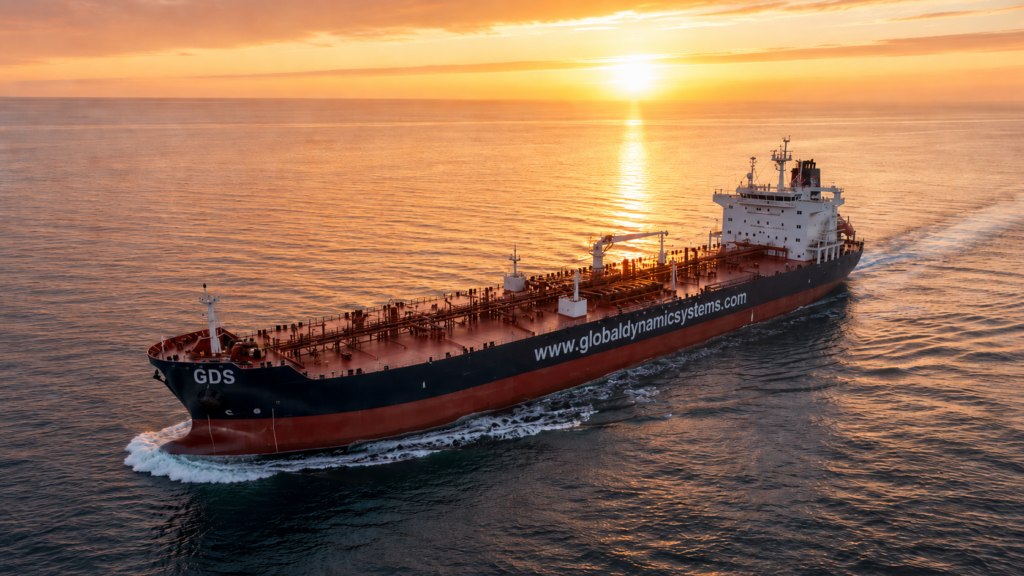
GDS Engineering R&D has further expanded the capabilities of its SERS-T™ Tanker Ship Simulator with the addition of a new Cargo Handling simulation module.

Developed as part of the wider Ship Engine Room Simulator (SERS™) platform, SERS-T™ was originally introduced to support realistic training for tanker personnel, including operational and management-level scenarios associated with tanker ship systems, SIRE 2.0 and ISM Code-based training.

Cargo Handling Now Integrated into SERS-T™

With the newly added module, the tanker simulation environment is no longer limited to machinery and engine-room systems. Cargo handling functions are now incorporated into the SERS-T™ training environment, expanding the range of tanker-specific operations that can be addressed through simulation.

The development strengthens SERS-T™ as a more comprehensive tanker training platform by connecting engine-room operations with cargo-related operational processes.

Cargo handling and operations are also among the technical areas addressed within SIRE 2.0 training, making the new module a natural extension of the tanker-focused simulation environment.

Expanding Tanker Training Capabilities

SERS™ already supports multiple ship and engine configurations, including tanker-type applications, as part of GDS Engineering R&D’s Full Mission engine room simulation platform.

The addition of the Cargo Handling module represents another step in the continued development of SERS-T™, allowing maritime training institutions and industry users to access a broader range of tanker-specific simulator applications within the GDS simulation ecosystem.

GDS Engineering R&D continues to expand SERS™ and SERS-T™ with new modules designed around evolving maritime training and operational requirements.

GDS Expands SERS™ with New Four-Stroke Engine Room Module

GDS Engineering R&D has expanded the capabilities of its Ship Engine Room Simulator (SERS™) with the addition of a new four-stroke engine room simulation module, developed to provide a realistic training environment for medium-speed propulsion systems and modern ship machinery operations.

The new module has also been installed at Sakarya University of Applied Sciences (SUBÜ), Maritime Vocational School, supporting applied maritime engineering education with simulator-based engine room training.

A Digital Twin Based on an 800 TEU Container Ship

The new SERS™ configuration is based on the machinery and operational characteristics of an 800 TEU container ship, creating a digital-twin-based training environment that reflects a realistic vessel configuration.

At the centre of the propulsion model is an 8-cylinder MAK43MC four-stroke main engine, combined with a Controllable Pitch Propeller (CPP) propulsion system.

This configuration gives trainees the opportunity to work with a propulsion arrangement that differs significantly from conventional slow-speed, fixed-pitch systems and to understand the relationship between main engine operation, propulsion control, CPP response and supporting engine room systems.

Practical Four-Stroke Engine Room Training with SERS™

With the new module, SERS™ now provides an additional platform for training on four-stroke main engine operations, auxiliary systems, propulsion control, alarms, operational procedures and fault scenarios.

The simulator allows students and marine engineers to observe system behaviour, practise operating procedures and investigate abnormal conditions within a controlled environment before facing similar situations onboard.

The addition of the four-stroke module further expands the range of vessel and machinery configurations available within SERS™, strengthening its use for hands-on, scenario-based and competency-oriented maritime training.

The installation at SUBÜ also represents another step in GDS Engineering R&D’s cooperation with maritime education institutions and its ongoing development of realistic simulation technologies based on actual vessel and machinery configurations.

GDS Begins Dual-Fuel Engine Model Development for SERS™

GDS Engineering R&D has started development of a new dual-fuel engine model to be integrated into the Ship Engine Room Simulator (SERS™) platform.

The new module is being developed as part of the continued expansion of SERS™, with the aim of extending the simulator’s engine and propulsion training capabilities toward dual-fuel machinery and modern engine-room operations.

In recent periods, GDS Engineering R&D has received an increasing number of requests for dual-fuel simulator configurations and related training capabilities. This growing demand has made dual-fuel simulation one of the important development areas in the continuing evolution of SERS™.

Expanding SERS™ for Dual-Fuel Training

The ongoing development work focuses on integrating a new dual-fuel engine model into the existing SERS™ simulation architecture.

Once integrated, the new model will expand the range of machinery configurations that can be represented within SERS™ and provide a basis for developing simulator-based operational and training scenarios for dual-fuel engine systems.

The project follows the same engineering approach used in the development of existing SERS™ modules: combining machinery-system modelling with interactive simulator interfaces and scenario-based training. SERS™ is already used as a competency-oriented engine-room simulation platform, supporting practical training through realistic system operation and simulator exercises.

For GDS Engineering R&D, the development is also a response to the changing requirements received from maritime training institutions and industry users. As simulator requests increasingly include dual-fuel engine configurations, expanding SERS™ in this direction will provide users with a broader platform for training on current and emerging marine propulsion technologies.

Development Has Started

The dual-fuel engine model is currently in the development and integration phase. Further details on the machinery configuration, simulator functions and training scenarios will be shared as the module progresses.

With this new development, GDS Engineering R&D continues to expand SERS™ with new vessel, machinery and propulsion configurations designed around the evolving training requirements of the maritime industry.

SERS™ continues to grow — from conventional engine-room systems to the next generation of marine propulsion training.