Summarized Introduction
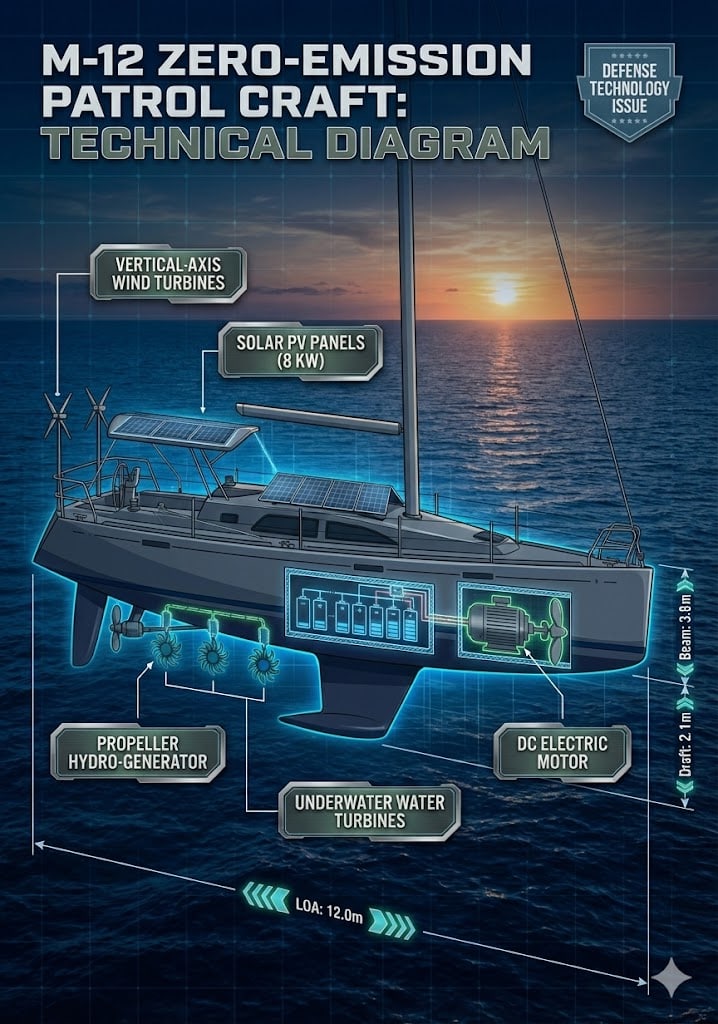
- The paper discusses the integration of renewable energy sources in marine transportation, particularly focusing on hybrid marine energy systems.
- It highlights the importance of reducing emissions and enhancing energy conservation in transport systems, which is crucial for environmental sustainability.
- The research identifies gaps in existing studies regarding the practical implementation of retrofitting vessels with renewable energy technologies.
- The paper aims to provide a comprehensive overview of hybrid marine energy systems and their feasibility for improving propulsion efficiency without significantly altering vessel design.
- It also emphasizes the need for multi-objective optimization in ship design to accommodate the effects of wind propulsion and other renewable energy sources.

Problem Statement
The core research question motivating the study is: “How can renewable-electric propulsion be effectively integrated into mid-sized cruising yachts to enhance environmental benefits and operational adequacy?” This question addresses the need for a comprehensive understanding of energy modeling, life-cycle impacts, and the operational constraints faced by such vessels.
Links and Citations:
MLA:
Nomak, Hamdi Sena, and İsmail Çiçek. “Integrating renewable propulsion systems in sailing yachts: An interdisciplinary life-cycle assessment and sustainable energy model.” Green Technologies and Sustainability (2026): 100341.
APA:
Nomak, H. S., & Çiçek, İ. (2026). Integrating renewable propulsion systems in sailing yachts: An interdisciplinary life-cycle assessment and sustainable energy model. Green Technologies and Sustainability, 100341.
ISO 690:
NOMAK, Hamdi Sena; ÇIÇEK, İsmail. Integrating renewable propulsion systems in sailing yachts: An interdisciplinary life-cycle assessment and sustainable energy model. Green Technologies and Sustainability, 2026, 100341.
Summarized Abstract
- The paper addresses the challenge of reducing life-cycle emissions in recreational craft, specifically focusing on renewable-electric yachts that can cut emissions by up to 85%.
- This matter is significant as it aligns with global efforts to decarbonize marine transportation and improve sustainability in the yachting industry.
- A notable gap identified is the lack of an integrated systems engineering framework that combines operational energy modeling with life-cycle assessment and techno-economic evaluation for mid-sized yachts.
- The paper aims to provide a comprehensive analysis of renewable energy management strategies, operational constraints, and techno-economic feasibility to enhance yacht design and policy towards zero-emission vessels.
Abstract
Sailing yachts can achieve operationally zero-emission propulsion by integrating solar photovoltaic (PV), wind and hydrokinetic generation with battery-electric drive systems. This study applies a systems engineering modeling framework to quantify the environmental, operational-energy and techno-economic performance of a renewable-electric retrofit for a 12 m cruising monohull, evaluated against diesel and battery-electric alternatives. An ISO 14040/14044-consistent life-cycle assessment (LCA) implemented in an Excel toolchain is coupled with time-resolved energy-balance simulations and a retrofit-oriented cost model (baseline year 2025). Over the functional unit (20 years or 20,000 nautical miles), the diesel baseline produces 65 t CO2-eq, while the battery-electric case yields 28 t CO2-eq under a moderately clean grid and the renewable-electric configuration achieves 10–12 t CO2-eq (80%–85% reduction versus diesel). In both electric cases, onboard operational CO2 emissions are eliminated, while life-cycle impacts persist due to manufacturing, replacement and end-of-life processes. Energy simulations show that integrated PV, wind and hydro generation can supply >80% of combined hotel and propulsion demand under representative cruising profiles, with storage buffering variability and an energy management strategy prioritizing real-time renewable utilization. The principal constraint is prolonged motoring in low-renewable conditions: a 30 kWh usable battery provides approximately 4 h at 5–6 kn (2.6–3.1 m/s). Sensitivity results emphasize that life-cycle outcomes are strongly influenced by electricity carbon intensity, battery production impacts, recycling rates and renewable availability. Overall, the study provides a transparent, replicable framework for designing and evaluating renewable-electric propulsion in recreational and small-scale marine craft within the broader scope of green technologies and sustainability.
Methods Used
- The paper employs a life-cycle assessment (LCA) methodology to evaluate the environmental performance of renewable propulsion systems in sailing yachts.
- An energy modeling approach is utilized to analyze energy generation, storage dynamics, and operational profiles under realistic conditions.
- A techno-economic assessment is conducted to determine the economic feasibility of different propulsion configurations, including diesel, battery-electric, and renewable-electric systems.
- The study integrates sensitivity analysis to address uncertainties in the modeling, enhancing the robustness of the findings.
- Feasibility metrics such as renewable fraction, emissions abatement cost, and operational adequacy are assessed to evaluate the practicality of the proposed systems.

Results
- The research indicates that an appropriately sized mix of photovoltaic (PV), wind, and hydro generation can meet the yacht’s hotel-load and limited propulsion demands during typical coastal cruising.
- The results support the feasibility of near-complete energy self-sufficiency during typical cruising profiles.
- The study clarifies the boundary conditions under which the energy self-sufficiency concept remains robust, including local renewable resource availability, operational intensity, and charging electricity mix.
- The primary impact metric evaluated is the 100-year Global Warming Potential (GWP100), which considers battery manufacturing, grid carbon intensity, battery replacement frequency, and recycling rates.
- Qualitative considerations of operational air pollutants, which are eliminated at the point of use in electric cases, are also included in the results interpretation.
Practical Implications
- The study emphasizes the importance of matching renewable capacity and storage to the expected duty cycle of yachts, which can enhance operational efficiency and energy management.
- It highlights the necessity of a well-designed Energy Management System (EMS) that automates power allocation, thereby reducing the burden on non-expert crews and improving energy-aware operations.
- The paper suggests that practical integration of renewable-electric propulsion systems requires robust marine-grade installation practices to ensure safety, maintainability, and fault tolerance.
- The findings indicate that real-world implementation is influenced by site-specific renewable inputs and operational assumptions, necessitating tailored approaches for different climates and usage intensities.
- The research underscores the need for instrumented sea trials to validate the modeling framework, ensuring that generation yields and user-driven load patterns are accurately assessed over extended periods.
Contributions
- The paper presents a life-cycle model that links vessel design, operation, and end-of-life impacts, enhancing understanding of environmental effects.
- It demonstrates that renewable-electric yachts can cut life-cycle emissions by up to 85%, showcasing significant potential for reducing environmental impact.
- The study highlights that solar, wind, and hydro sources can meet over 80% of yacht energy demand, promoting sustainable energy solutions.
- An adaptive energy management system is proposed, which improves autonomy and battery lifespan, addressing operational efficiency.
- The techno-economic analysis indicates a feasible payback under real sailing use, suggesting practical viability for stakeholders
Referencfes
[1] L. Bilgili, V. Şahin, Emission and environmental cost estimation of ferries operating in Lake Van, Marit. Technol. Res. 5 (3) (2023) http://dx.doi.org/10.33175/mtr.2023.262215.
[2] V. Alfonsin, A. Suarez, S. Urrejola, J. Miguez, A. Sanchez, Integration of several renewable energies for internal combustion engine substitution in a commercial sailboat, Int. J. Hydrog. Energy 40 (20) (2015) 6689–6701, http://dx.doi.org/10.1016/j.ijhydene.2015.02.113.
[3] H.S. Nomak, İ. Çiçek, Yenilenebilir Enerji Kaynakları ile Sıfır Emisyonlu bir Yelkenli Tekne Tasarımı ve Seyir Simülasyonları, Çevre İklim Ve SürdürÜlebilirlik 23 (1) (2022) 41–54, [Online]. Available: http://dergipark.org.tr/tr/pub/itucis/issue/68628/1050691. (Accessed: 28 August 2025).
[4] T. Akiyama, J.F. Bousquet, K. Roncin, G. Muirhead, A. Whidden, An engineering design approach for the development of an autonomous sailboat to cross the atlantic ocean, Appl. Sci. (Switzerland) 11 (17) (2021) http://dx.doi.org/10.3390/app11178046.
[5] T. Peša, M. Krčum, G. Kero, J. Šoda, Retrofitting vessel with solar and wind renewable energy sources as an example of the Croatia study-case, J. Mar. Sci. Eng. 10 (10) (2022) http://dx.doi.org/10.3390/jmse10101471.
[6] International Council of Marine Industry Associations (ICOMIA) and Ricardo, Pathways to propulsion decarbonisation for the recreational marine industry: Synopsis report, 2023.
[7] A. Glykas, G. Papaioannou, S. Perissakis, Application and cost–benefit analysis of solar hybrid power installation on merchant marine vessels, Ocean Eng. 37 (7) (2010) 592–602, http://dx.doi.org/10.1016/J.OCEANENG.2010.01.019.
[8] Ahmed. A. Hossam-Eldin, K.H. Youssef, K.M. AboRas, Outdoor performance of micro scale wind turbine stand alone system, J. Clean Energy Technol. 5 (3) (2017) 236–242, http://dx.doi.org/10.18178/JOCET.2017.5.3.375.
[9] J.R. Erriah, P. Liu, S. Turkmen, Hydrodynamic development and optimisation of a retrofittable dual-mode propeller turbine, Energies 17 (13) (2024) http://dx.doi.org/10.3390/en17133138.
[10] C. Rickert, A.M. Thevar Parambil, M. Leimeister, Conceptual study and develop-ment of an autonomously operating, sailing renewable energy conversion system, Energies (Basel) 15 (12) (2022) http://dx.doi.org/10.3390/en15124434.
[11] G. Radica, T. Vidović, J. Šimunović, Z. Jurić, Overview of hybrid marine energy system configurations and system component modeling approaches, Energies (Basel) 18 (5) (2025) http://dx.doi.org/10.3390/EN18051189.
[12] Z. Lv, W. Shang, Impacts of intelligent transportation systems on energy con-servation and emission reduction of transport systems: A comprehensive review, Green Technol. Sustain. (2023) http://dx.doi.org/10.1016/j.grets.2022.100002.
[13] X. Wang, J. Zhu, M. Han, Industrial Development Status and Prospects of the Marine Fuel Cell: A Review, MDPI, 2023, http://dx.doi.org/10.3390/jmse11020238.
[14] D. Olsson, F. Glaunsinger, Comparative Life Cycle Assessment of Electric Hydro-foil Boats and Fossil Driven Alternatives, Degree Project, KTH Royal Institute of Technology, Stockholm, Sweden, 2022.
[15] N.K. Obiora, C.O. Ujah, C.O. Asadu, F.O. Kolawole, B.N. Ekwueme, Production of hydrogen energy from biomass: Prospects and challenges, Green Technol. Sustain. 2 (2024) 100100.
[16] B.J. Cipriano, et al., Modeling and analysis of the voyage cycle for ferryboat electrification, Marit. Technol. Res. 5 (3) (2023) http://dx.doi.org/10.33175/MTR.2023.261999, 261999–261999.
[17] T. Zito, C. Park, B. Jeong, Life cycle assessment and economic benefits of a solar assisted short route ferry operating in the Strait of Messina, J. Int. Marit. Saf. Environ. Aff. Shipp. 6 (1) (2022) 24–38, http://dx.doi.org/10.1080/25725084.2021.1968664.
[18] M. Kolodziejski, I. Michalska-Pozoga, Battery Energy Storage Systems in Ships’ Hybrid/Electric Propulsion Systems, MDPI, 2023, http://dx.doi.org/10.3390/en16031122.
[19] S. Suardi, M.K. Maulana, R.J. Ikhwani, M.U. Pawara, F. Mahmuddin, M. Tasrief, Design and implementation of solar cells as an alternative power source for pinisi ships, Comput. Exp. Res. Mater. Renew. Energy 7 (2) (2024) 93, http://dx.doi.org/10.19184/cerimre.v7i2.52111.
[20] Z. Wang, et al., Optimizing energy management and case study of multi-energy coupled supply for green ships, J. Mar. Sci. Eng. 11 (7) (2023) 1286, http://dx.doi.org/10.3390/JMSE11071286.
[21] H. Wang, M.Z. Aung, X. Xu, E. Boulougouris, Life cycle analysis of hydro-gen powered marine vessels—Case ship comparison study with conventional power system, Sustainability 15 (17) (2023) 12946, http://dx.doi.org/10.3390/SU151712946.
[22] X. Guo, et al., Energy Management System for Hybrid Ship: Status and Perspectives, Elsevier Ltd., 2024, http://dx.doi.org/10.1016/j.oceaneng.2024.118638.
[23] B. Mannan, M.J. Rizvi, Y.M. Dai, Ship recycling in developing economies of south Asia: Changing liability to a commodity, Green Technol. Sustain. 2 (2) (2024) http://dx.doi.org/10.1016/j.grets.2023.100064.
[24] Z. Zapałowicz, W. Zeńczak, The possibilities to improve ship’s energy efficiency through the application of PV installation including cooled modules, Renew. Sustain. Energy Rev. 143 (2021) http://dx.doi.org/10.1016/j.rser.2021.110964.
[25] B. Jeong, H. Jeon, S. Kim, J. Kim, P. Zhou, Evaluation of the lifecycle environmental benefits of full battery powered ships: Comparative analysis of marine diesel and electricity, J. Mar. Sci. Eng. 8 (8) (2020) http://dx.doi.org/10.3390/JMSE8080580.
[26] S. Ekinci, M. Alvar, Sıfır emisyonlu yenilenebilir enerji üreten yelkenli bir tekne ic¸in sualtı türbin tasarımı, Dicle Üniversitesi Mühendislik Fakültesi Mühendislik Derg. 7 (3) (2016) 537–550.
[27] T.H. Chowdhury, M.R. Islam, F. Alam, M.E.A. Murad, R. Hasan, H.R. Lipu, Design of a boat powered by solar energy with an 180◦ rotating solar tracking system, SEU J. Electr. Electron. Eng. 4 (2) (2024) 916.
[28] T. Plessas, A. Papanikolaou, Multi-objective optimization of ship design for the effect of wind propulsion †, J. Mar. Sci. Eng. 13 (1) (2025) http://dx.doi.org/10.3390/jmse13010167.
[29] M. Van der Plas, W. Hillege, P. De Vos, The impact of hydro generation on board large sailing yachts, in: International Marine Design Conference, 2024, http://dx.doi.org/10.59490/imdc.2024.906.
[30] B. Bacalja Bašić, M. Krčum, Z. Jurić, Propeller optimization in marine power sys-tems: Exploring its contribution and correlation with renewable energy solutions, J. Mar. Sci. Eng. 12 (5) (2024) http://dx.doi.org/10.3390/jmse12050843.
[31] A.S. Alamoush, A.I. Ölçer, Harnessing cutting-edge technologies for sustainable future shipping: An overview of innovations, drivers, barriers and opportunities, Marit. Technol. Res. 7 (4) (2025) 277313, http://dx.doi.org/10.33175/MTR.2025.277313.
[32] I. Animah, P. Adjei, E.K. Djamesi, Techno-economic feasibility assessment model for integrating hybrid renewable energy systems into power systems of existing ships: A case study of a patrol boat, J. Mar. Eng. Technol. 22 (1) (2023) 22–37, http://dx.doi.org/10.1080/20464177.2022.2087272.
[33] T. Shah, M. Shah, Electrifying the future: Understanding the consumer trends of adoption of electric vehicles in developing nations, Green Technol. Sustain. (2024) http://dx.doi.org/10.1016/j.grets.2024.100101.