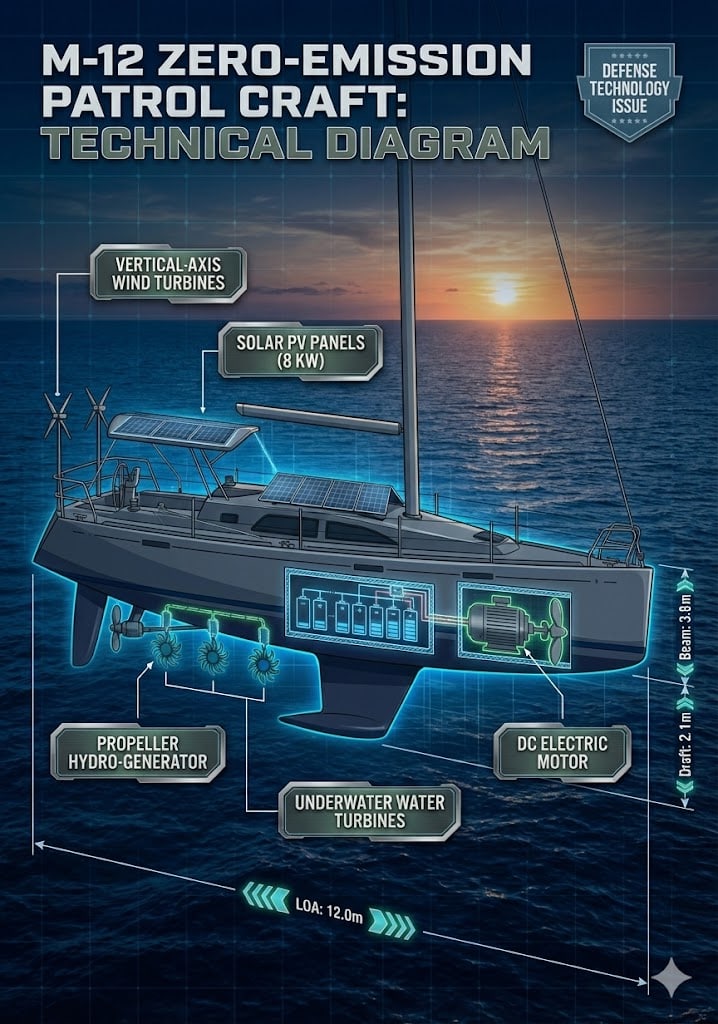
Integrating renewable propulsion systems in sailing yachts: An interdisciplinary life-cycle assessment and sustainable energy model – New Q1 Journal Paper Published. A Review Post.

Summarized Introduction

  • The paper discusses the integration of renewable energy sources in marine transportation, particularly focusing on hybrid marine energy systems.
  • It highlights the importance of reducing emissions and enhancing energy conservation in transport systems, which is crucial for environmental sustainability.
  • The research identifies gaps in existing studies regarding the practical implementation of retrofitting vessels with renewable energy technologies.
  • The paper aims to provide a comprehensive overview of hybrid marine energy systems and their feasibility for improving propulsion efficiency without significantly altering vessel design.
  • It also emphasizes the need for multi-objective optimization in ship design to accommodate the effects of wind propulsion and other renewable energy sources.

Problem Statement

The core research question motivating the study is: “How can renewable-electric propulsion be effectively integrated into mid-sized cruising yachts to enhance environmental benefits and operational adequacy?” This question addresses the need for a comprehensive understanding of energy modeling, life-cycle impacts, and the operational constraints faced by such vessels.

Links and Citations:

Link: https://www.sciencedirect.com/science/article/pii/S2949736126000072?getft_integrator=clarivate&pes=vor&utm_source=clarivate

MLA:
Nomak, Hamdi Sena, and İsmail Çiçek. “Integrating renewable propulsion systems in sailing yachts: An interdisciplinary life-cycle assessment and sustainable energy model.” Green Technologies and Sustainability (2026): 100341.

APA:
Nomak, H. S., & Çiçek, İ. (2026). Integrating renewable propulsion systems in sailing yachts: An interdisciplinary life-cycle assessment and sustainable energy model. Green Technologies and Sustainability, 100341.

ISO 690:
NOMAK, Hamdi Sena; ÇIÇEK, İsmail. Integrating renewable propulsion systems in sailing yachts: An interdisciplinary life-cycle assessment and sustainable energy model. Green Technologies and Sustainability, 2026, 100341.


Summarized Abstract

  • The paper addresses the challenge of reducing life-cycle emissions in recreational craft, specifically focusing on renewable-electric yachts that can cut emissions by up to 85%.
  • This matter is significant as it aligns with global efforts to decarbonize marine transportation and improve sustainability in the yachting industry.
  • A notable gap identified is the lack of an integrated systems engineering framework that combines operational energy modeling with life-cycle assessment and techno-economic evaluation for mid-sized yachts.
  • The paper aims to provide a comprehensive analysis of renewable energy management strategies, operational constraints, and techno-economic feasibility to enhance yacht design and policy towards zero-emission vessels.

Abstract

Sailing yachts can achieve operationally zero-emission propulsion by integrating solar photovoltaic (PV), wind and hydrokinetic generation with battery-electric drive systems. This study applies a systems engineering modeling framework to quantify the environmental, operational-energy and techno-economic performance of a renewable-electric retrofit for a 12 m cruising monohull, evaluated against diesel and battery-electric alternatives. An ISO 14040/14044-consistent life-cycle assessment (LCA) implemented in an Excel toolchain is coupled with time-resolved energy-balance simulations and a retrofit-oriented cost model (baseline year 2025). Over the functional unit (20 years or 20,000 nautical miles), the diesel baseline produces 65 t CO2-eq, while the battery-electric case yields 28 t CO2-eq under a moderately clean grid and the renewable-electric configuration achieves 10–12 t CO2-eq (80%–85% reduction versus diesel). In both electric cases, onboard operational CO2 emissions are eliminated, while life-cycle impacts persist due to manufacturing, replacement and end-of-life processes. Energy simulations show that integrated PV, wind and hydro generation can supply >80% of combined hotel and propulsion demand under representative cruising profiles, with storage buffering variability and an energy management strategy prioritizing real-time renewable utilization. The principal constraint is prolonged motoring in low-renewable conditions: a 30 kWh usable battery provides approximately 4 h at 5–6 kn (2.6–3.1 m/s). Sensitivity results emphasize that life-cycle outcomes are strongly influenced by electricity carbon intensity, battery production impacts, recycling rates and renewable availability. Overall, the study provides a transparent, replicable framework for designing and evaluating renewable-electric propulsion in recreational and small-scale marine craft within the broader scope of green technologies and sustainability.

Methods Used

  • The paper employs a life-cycle assessment (LCA) methodology to evaluate the environmental performance of renewable propulsion systems in sailing yachts.
  • An energy modeling approach is utilized to analyze energy generation, storage dynamics, and operational profiles under realistic conditions.
  • A techno-economic assessment is conducted to determine the economic feasibility of different propulsion configurations, including diesel, battery-electric, and renewable-electric systems.
  • The study integrates sensitivity analysis to address uncertainties in the modeling, enhancing the robustness of the findings.
  • Feasibility metrics such as renewable fraction, emissions abatement cost, and operational adequacy are assessed to evaluate the practicality of the proposed systems.

Results

  • The research indicates that an appropriately sized mix of photovoltaic (PV), wind, and hydro generation can meet the yacht’s hotel-load and limited propulsion demands during typical coastal cruising.
  • The results support the feasibility of near-complete energy self-sufficiency during typical cruising profiles.
  • The study clarifies the boundary conditions under which the energy self-sufficiency concept remains robust, including local renewable resource availability, operational intensity, and charging electricity mix.
  • The primary impact metric evaluated is the 100-year Global Warming Potential (GWP100), which considers battery manufacturing, grid carbon intensity, battery replacement frequency, and recycling rates.
  • Qualitative considerations of operational air pollutants, which are eliminated at the point of use in electric cases, are also included in the results interpretation.

Practical Implications

  • The study emphasizes the importance of matching renewable capacity and storage to the expected duty cycle of yachts, which can enhance operational efficiency and energy management.
  • It highlights the necessity of a well-designed Energy Management System (EMS) that automates power allocation, thereby reducing the burden on non-expert crews and improving energy-aware operations.
  • The paper suggests that practical integration of renewable-electric propulsion systems requires robust marine-grade installation practices to ensure safety, maintainability, and fault tolerance.
  • The findings indicate that real-world implementation is influenced by site-specific renewable inputs and operational assumptions, necessitating tailored approaches for different climates and usage intensities.
  • The research underscores the need for instrumented sea trials to validate the modeling framework, ensuring that generation yields and user-driven load patterns are accurately assessed over extended periods.

Contributions

  • The paper presents a life-cycle model that links vessel design, operation, and end-of-life impacts, enhancing understanding of environmental effects.
  • It demonstrates that renewable-electric yachts can cut life-cycle emissions by up to 85%, showcasing significant potential for reducing environmental impact.
  • The study highlights that solar, wind, and hydro sources can meet over 80% of yacht energy demand, promoting sustainable energy solutions.
  • An adaptive energy management system is proposed, which improves autonomy and battery lifespan, addressing operational efficiency.
  • The techno-economic analysis indicates a feasible payback under real sailing use, suggesting practical viability for stakeholders

Referencfes

[1] L. Bilgili, V. Şahin, Emission and environmental cost estimation of ferries operating in Lake Van, Marit. Technol. Res. 5 (3) (2023) http://dx.doi.org/10.33175/mtr.2023.262215.

[2] V. Alfonsin, A. Suarez, S. Urrejola, J. Miguez, A. Sanchez, Integration of several renewable energies for internal combustion engine substitution in a commercial sailboat, Int. J. Hydrog. Energy 40 (20) (2015) 6689–6701, http://dx.doi.org/10.1016/j.ijhydene.2015.02.113.

[3] H.S. Nomak, İ. Çiçek, Yenilenebilir Enerji Kaynakları ile Sıfır Emisyonlu bir Yelkenli Tekne Tasarımı ve Seyir Simülasyonları, Çevre İklim Ve SürdürÜlebilirlik 23 (1) (2022) 41–54, [Online]. Available: http://dergipark.org.tr/tr/pub/itucis/issue/68628/1050691. (Accessed: 28 August 2025).

[4] T. Akiyama, J.F. Bousquet, K. Roncin, G. Muirhead, A. Whidden, An engineering design approach for the development of an autonomous sailboat to cross the atlantic ocean, Appl. Sci. (Switzerland) 11 (17) (2021) http://dx.doi.org/10.3390/app11178046.

[5] T. Peša, M. Krčum, G. Kero, J. Šoda, Retrofitting vessel with solar and wind renewable energy sources as an example of the Croatia study-case, J. Mar. Sci. Eng. 10 (10) (2022) http://dx.doi.org/10.3390/jmse10101471.

[6] International Council of Marine Industry Associations (ICOMIA) and Ricardo, Pathways to propulsion decarbonisation for the recreational marine industry: Synopsis report, 2023.

[7] A. Glykas, G. Papaioannou, S. Perissakis, Application and cost–benefit analysis of solar hybrid power installation on merchant marine vessels, Ocean Eng. 37 (7) (2010) 592–602, http://dx.doi.org/10.1016/J.OCEANENG.2010.01.019.

[8] Ahmed. A. Hossam-Eldin, K.H. Youssef, K.M. AboRas, Outdoor performance of micro scale wind turbine stand alone system, J. Clean Energy Technol. 5 (3) (2017) 236–242, http://dx.doi.org/10.18178/JOCET.2017.5.3.375.

[9] J.R. Erriah, P. Liu, S. Turkmen, Hydrodynamic development and optimisation of a retrofittable dual-mode propeller turbine, Energies 17 (13) (2024) http://dx.doi.org/10.3390/en17133138.
[10] C. Rickert, A.M. Thevar Parambil, M. Leimeister, Conceptual study and develop-ment of an autonomously operating, sailing renewable energy conversion system, Energies (Basel) 15 (12) (2022) http://dx.doi.org/10.3390/en15124434.

[11] G. Radica, T. Vidović, J. Šimunović, Z. Jurić, Overview of hybrid marine energy system configurations and system component modeling approaches, Energies (Basel) 18 (5) (2025) http://dx.doi.org/10.3390/EN18051189.

[12] Z. Lv, W. Shang, Impacts of intelligent transportation systems on energy con-servation and emission reduction of transport systems: A comprehensive review, Green Technol. Sustain. (2023) http://dx.doi.org/10.1016/j.grets.2022.100002.

[13] X. Wang, J. Zhu, M. Han, Industrial Development Status and Prospects of the Marine Fuel Cell: A Review, MDPI, 2023, http://dx.doi.org/10.3390/jmse11020238.

[14] D. Olsson, F. Glaunsinger, Comparative Life Cycle Assessment of Electric Hydro-foil Boats and Fossil Driven Alternatives, Degree Project, KTH Royal Institute of Technology, Stockholm, Sweden, 2022.

[15] N.K. Obiora, C.O. Ujah, C.O. Asadu, F.O. Kolawole, B.N. Ekwueme, Production of hydrogen energy from biomass: Prospects and challenges, Green Technol. Sustain. 2 (2024) 100100.

[16] B.J. Cipriano, et al., Modeling and analysis of the voyage cycle for ferryboat electrification, Marit. Technol. Res. 5 (3) (2023) http://dx.doi.org/10.33175/MTR.2023.261999, 261999–261999.

[17] T. Zito, C. Park, B. Jeong, Life cycle assessment and economic benefits of a solar assisted short route ferry operating in the Strait of Messina, J. Int. Marit. Saf. Environ. Aff. Shipp. 6 (1) (2022) 24–38, http://dx.doi.org/10.1080/25725084.2021.1968664.

[18] M. Kolodziejski, I. Michalska-Pozoga, Battery Energy Storage Systems in Ships’ Hybrid/Electric Propulsion Systems, MDPI, 2023, http://dx.doi.org/10.3390/en16031122.

[19] S. Suardi, M.K. Maulana, R.J. Ikhwani, M.U. Pawara, F. Mahmuddin, M. Tasrief, Design and implementation of solar cells as an alternative power source for pinisi ships, Comput. Exp. Res. Mater. Renew. Energy 7 (2) (2024) 93, http://dx.doi.org/10.19184/cerimre.v7i2.52111.

[20] Z. Wang, et al., Optimizing energy management and case study of multi-energy coupled supply for green ships, J. Mar. Sci. Eng. 11 (7) (2023) 1286, http://dx.doi.org/10.3390/JMSE11071286.

[21] H. Wang, M.Z. Aung, X. Xu, E. Boulougouris, Life cycle analysis of hydro-gen powered marine vessels—Case ship comparison study with conventional power system, Sustainability 15 (17) (2023) 12946, http://dx.doi.org/10.3390/SU151712946.

[22] X. Guo, et al., Energy Management System for Hybrid Ship: Status and Perspectives, Elsevier Ltd., 2024, http://dx.doi.org/10.1016/j.oceaneng.2024.118638.

[23] B. Mannan, M.J. Rizvi, Y.M. Dai, Ship recycling in developing economies of south Asia: Changing liability to a commodity, Green Technol. Sustain. 2 (2) (2024) http://dx.doi.org/10.1016/j.grets.2023.100064.

[24] Z. Zapałowicz, W. Zeńczak, The possibilities to improve ship’s energy efficiency through the application of PV installation including cooled modules, Renew. Sustain. Energy Rev. 143 (2021) http://dx.doi.org/10.1016/j.rser.2021.110964.

[25] B. Jeong, H. Jeon, S. Kim, J. Kim, P. Zhou, Evaluation of the lifecycle environmental benefits of full battery powered ships: Comparative analysis of marine diesel and electricity, J. Mar. Sci. Eng. 8 (8) (2020) http://dx.doi.org/10.3390/JMSE8080580.

[26] S. Ekinci, M. Alvar, Sıfır emisyonlu yenilenebilir enerji üreten yelkenli bir tekne ic¸in sualtı türbin tasarımı, Dicle Üniversitesi Mühendislik Fakültesi Mühendislik Derg. 7 (3) (2016) 537–550.

[27] T.H. Chowdhury, M.R. Islam, F. Alam, M.E.A. Murad, R. Hasan, H.R. Lipu, Design of a boat powered by solar energy with an 180◦ rotating solar tracking system, SEU J. Electr. Electron. Eng. 4 (2) (2024) 916.

[28] T. Plessas, A. Papanikolaou, Multi-objective optimization of ship design for the effect of wind propulsion †, J. Mar. Sci. Eng. 13 (1) (2025) http://dx.doi.org/10.3390/jmse13010167.

[29] M. Van der Plas, W. Hillege, P. De Vos, The impact of hydro generation on board large sailing yachts, in: International Marine Design Conference, 2024, http://dx.doi.org/10.59490/imdc.2024.906.

[30] B. Bacalja Bašić, M. Krčum, Z. Jurić, Propeller optimization in marine power sys-tems: Exploring its contribution and correlation with renewable energy solutions, J. Mar. Sci. Eng. 12 (5) (2024) http://dx.doi.org/10.3390/jmse12050843.

[31] A.S. Alamoush, A.I. Ölçer, Harnessing cutting-edge technologies for sustainable future shipping: An overview of innovations, drivers, barriers and opportunities, Marit. Technol. Res. 7 (4) (2025) 277313, http://dx.doi.org/10.33175/MTR.2025.277313.

[32] I. Animah, P. Adjei, E.K. Djamesi, Techno-economic feasibility assessment model for integrating hybrid renewable energy systems into power systems of existing ships: A case study of a patrol boat, J. Mar. Eng. Technol. 22 (1) (2023) 22–37, http://dx.doi.org/10.1080/20464177.2022.2087272.

[33] T. Shah, M. Shah, Electrifying the future: Understanding the consumer trends of adoption of electric vehicles in developing nations, Green Technol. Sustain. (2024) http://dx.doi.org/10.1016/j.grets.2024.100101.

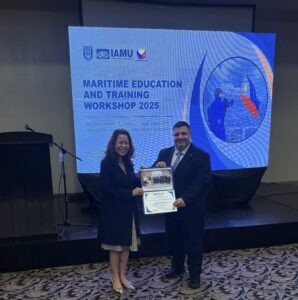
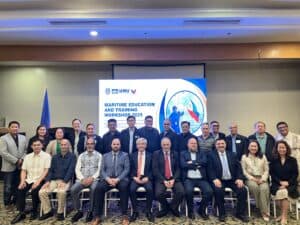
GDS Engineering at the 2025 Maritime Education and Training (MET) Workshop in Cebu City, Philippines

GDS Engineering is pleased to announce its participation in the 2025 Maritime Education and Training (MET) Workshop, jointly organized by the International Association of Maritime Universities (IAMU) and the Maritime Industry Authority (MARINA). The event brought together representatives from 79 Maritime Higher Education Institutions (MHEIs) across the Philippines, including university leaders, deans, program heads, and academic directors, along with international experts from Croatia, India, Japan, Sweden, and Türkiye.

Recognized as one of the region’s most influential platforms for enhancing competence based maritime education, the workshop facilitated meaningful discussions on strengthening training standards, developing academic capacity, and integrating innovative instructional methodologies into MET programs.


Presentation by Dr. Ismail Cicek

During the workshop, Dr. Ismail Cicek, Associate Professor at Istanbul Technical University and General Manager of GDS Engineering, delivered a well-received presentation titled:

“Future-Proofing Marine Engineer Competence: Integrating Objective and Collaborative Assessment through Engine Room Simulation.”

His session highlighted how next-generation training technologies, particularly the SERS™ Engine Room Simulator developed by GDS Engineering, can support MET institutions in:

  • enhancing individual competence through objective, automated performance assessment;
  • strengthening team-based skills such as communication, situational awareness, and resource management;
  • aligning training practices with STCW 2010 and IMO Model Course 2.07 requirements;
  • providing realistic full-mission environments for collaborative decision-making and emergency response;
  • expanding technical proficiency via advanced engineering, malfunction, and risk-management exercises.

Global Trends in Simulation Based Maritime Education

The strong interest shown by participants in simulation-based training demonstrated a global rise in digital, data-driven, and collaborative approaches within maritime education. This aligns with the increasing demand for immersive, technology-enhanced learning environments that prepare marine engineers for modern operational challenges.

At GDS Engineering, we value the role of advanced training technologies in strengthening maritime education. We are pleased to contribute to initiatives that help improve training quality, support competence development, and promote safer and more effective engineering operations in the maritime industry.

For further information about our simulation technologies or international collaborations, please contact us.

📩 info@globaldynamicsystems.com


SERS™ Expands with Two New Installations!

Our SERS™ Ship Engine Room Simulators have now been installed at two distinguished maritime universities in Turkiye: Recep Tayyip Erdogan University (Turgut Kıran Maritime Faculty) and Karadeniz Technical University (Sürmene Faculty of Marine Sciences), empowering the next generation of marine engineers with real-life operational experience.

Each installation includes:
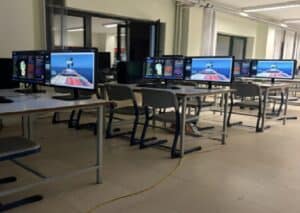
▪️ 8+1 Laboratory Configuration for individual operation and objective performance assessment
▪️ Full Mission Simulator for advanced team coordination and emergency response training

The laboratory configuration allows students to start up and operate systems individually while being objectively assessed through the SERS™ platform, covering multiple competencies defined under IMO STCW 2010.

The full mission simulator recreates an entire engine room and control room environment, supporting realistic team coordination, maneuvering, watchkeeping, and failure response scenarios — fully compliant with IMO Model Course 2.07.

We sincerely appreciate both universities for their cooperation and trust throughout these projects.

At GDS Engineering R&D, we continue to advance maritime education with high-fidelity simulation technologies that bring realism and quality to the next level, expanding the reach of SERS™ across Türkiye and beyond.

If you would like to strengthen your institution’s maritime training infrastructure or learn more about our SERS™ solutions, please contact us for further information or a quotation.

Contact us: info@globaldynamics.com


MIL-STD-810H Online Training Class [EU Timezone, UTC+2]

September 15, 2025 @ 8:00 am September 17, 2025 @ 1:00 pm

Two and a half days of
focused, Online or On-Site Training
on MIL-STD-810H with Emphasis on “Tailoring

Training on MIL-STD-810H Environmental Testing with Tailoring Examples

This training is important for testing and certifying your military equipment and products following MIL-STD-810H, platform test requirements, and other applicable standards and specifications. The training focuses on the test sections described in the standard document:

MIL-STD-810H
US Department of Defense Test Method Standard
Environmental Engineering Considerations and Laboratory Tests

The instructors share their experience and knowledge gained by working long years designing products and performing tests, i.e., MIL-STD-810H, RTCA-DO-160G, and MIL-STD-461G. The slides are supported by graphics and test videos for the efficiency and clarity of the information, and each session is planned to follow the test methods described in MIL-STD-810H. Dr. Ismail Cicek is the lead instructor of this training, and several experienced test personnel and design engineers help complete the training sessions efficiently. The following link describes Dr. Cicek’s experiences on the topic in more detail:

Purpose of the Training

 The purpose is to have a good understanding of equipment testing by the MIL-STD-810H document. The attendees completing this training are expected to know the following:

  • Understand MIL-STD-810H test methods and procedures
  • Understand how to apply tailoring given Life Cycle Environmental and Mission Profiles
  • Be able to write a list of susceptibilities
  • Understand the test process goals and activities
  • Develop test plans and schedule tests
  • Execute tests
  • Understand test results
  • Create test reports
  • Be able to resolve test results by applying change recommendations or accepting anomalies with risk assessment.

Training Scope

The training sessions cover the following topics with annotated slides, test photos, videos, and additional reference material from standards, specifications, and guides:

  • Systems Engineering Process Overview and Test & Evaluation (T&E): Important Concepts, such as Product Development and V&V Processes, Test Requirements, Requirements Management, Concepts of Operations (CONOPS) Environmental Profile (LCEP), and Mission Profile/Requirements.
  • Tailoring Process
  • MIL-STD-810H Part I, II, and III
  • Understanding the Purpose of the Test Methods
  • Test Methods and Procedure Selection based on Equipment Type
  • Developing a List of Susceptibilities
  • Test Equipment, Chambers, and other Devices
  • Test Procedures and Other Technical Details of Running Tests with Tailoring
  • Scheduling and implementation of the Tests
  • Review of Test Reports
  • Design Issues, Discussion of Test Failures, Test Interruptions, and Recommendations
  • Risk Management Process for Resolving Anomalies
  • Additional or Alternative Standards (Military and Industrial) and Test Recommendations

Read more details about this training content at the GDS Website:https://www.globaldynamicsystems.com/systems-engineering-training-courses/

Instructors

Dr. Ismail Cicek mainly provides training, assisted by several GDS personnel experienced in environmental testing and management.

Dr Ismail Cicek provides training with over 20 years of experience in the environmental qualification testing of products such as MIL-STD-810H and RTCA-DO-160G. Dr Cicek led various engineering programs and projects and managed the US Air Force test projects for many years. Dr Cicek worked as the lab chief engineer for five years at the US Air Force Aeromedical Test Lab at WPAFB, OH. Training is also assisted by our personnel, who are experienced in designing and environmental testing military and aerospace equipment.

Read DAU Paper: “A New Process for the Acceleration Test and Evaluation of Aeromedical Equipment for U.S. Air Force Safe-To-Fly Certification.” Click to display this report.

Since 2009, the GDS Team has provided MIL-STD-810, RTCA-DO-160, and MIL-STD-461 training courses to more than five hundred students and over one hundred organizations worldwide. Read more details about the instructors at https://www.GlobalDynamicSystems.com.

Training Schedule and Execution Type

  • Online training using ZOOM.
  • Led by two live instructors experienced in the field by testing and lecturing.
  • Two and a half days of focused online training schedule is typically as follows
    • 1st Day: 08:00 – 16:30 (Lunch Break between 12:00 and 13:00)2nd Day: 08:00 – 16:30 (Lunch Break between 12:00 and 13:00)3rd Day: 08:00 – 12:00
    • Time zone: Central European Time (CET)
  • Attendees will receive a Training Certificate.
  • Training includes knowledge check quizzes, a competition type, a fun way, or learning with prizes.

Training Contents

Training covers each test section of the MIL-STD-810H, and the following items are discussed in each of the individual training sessions:

  • Purpose of the Test. Potential Environmental Effects to Equipment Under Test (EUT) Fundamental Subjects (that may be of importance for understanding)
  • Equipment Types and Test Requirements.
  • Test Equipment, Cabins, or Devices / Test Environment / Test Pass/Fail Criteria
  • Test Procedures / Evaluation of the Test Results
  • Potential Failures and Design Recommendations Additional Discussions and Recommendations
  • It also includes some tests not included in the MIL-STD-810H, yet it may be a requirement.

MIL_STD-810H Test Methods

500.6 Low Pressure (Altitude)
501.7 High Temperature
502.7 Low Temperature
503.7 Temperature Shock
504.3 Contamination by Fluids           
505.7 Solar Radiation (Sunshine)
506.6 Rain (IP for Water)
507.6 Humidity
508.8 Fungus
509.7 Salt Fog
510.7 Sand and Dust (IP for Sand/Dust)
511.7 Explosive Atmosphere
512.6 Immersion (IP for Water)
513.8 Acceleration
514.8 Vibration
515.8 Acoustic Noise
516.8 Shock
517.3 Pyroshock
518.2 Acidic Atmosphere
519.8 Gunfire Shock
520.5   Combined Environments
521.4 Icing/Freezing Rain
522.2 Ballistic Shock          
523.4 Vibro-Acoustic/Temperature
524.1 Freeze / Thaw
525.2 Time Waveform Replication
526.2   Rail Impact
527.2   Multi-Exciter
528.1   Mechanical Vibrations of Shipboard Equipment (Type I – Environmental and Type II – Internally Excited

Platform and equipment test examples are provided in each test method presentation and discussion, including:

  • Military aircraft platforms (fixed and rotary wing), ground vehicles, and navy ships
  • Avionics, electrical and mechanical systems, and structural project applications
  • Test tailoring examples to include the selection of tests, parameter levels, and durations
    • Concepts of Operations (CONOPS) document and test curve establishment.
    • Tailoring and Life Cycle Environmental Profile (LCEP)
    • Mission Profile

For tailoring, read more at https://www.globaldynamicsystems.com/posts/mil-std-810h-training-tailoring-is-essential-explained/.

Two and a half days of
focused, Online or On-Site Training
on MIL-STD-810H with Emphasis on “Tailoring

by
Dr. Ismail Cicek
Global Dynamic Systems, Inc.(GDS)

Please semd us an email or provide your reuest for training enrollment using the following form. Thank you.

Please provide us your training interest with enough information, for example, the training name and date of the training. For Individual Training, type in the training name and date of the training you would like to participate. For group training requests and quotes, please type – your interested training name, – approximate number of attendees – training type (online or face-to-face) Please provide enough information for other training requests. Thank you.

Details

Organizer

  • GDS Training Institute (EU)
  • Phone +90 546 934 95 99
  • Email info@globaldynamicsystems.com
  • Website View Organizer Website

Online Training via ZOOM

ZOOM Link and Training Material will be shared with the registrants
View Venue Website

IPS/ILS and Reliability Engineering Training [Online]

Platform Management Certification Training – Week 2: Integrated Product Support (IPS), Integrated Logistics Support (ILS), and Reliability Engineering Training [Online]

July 12, 2025 @ 8:30 am July 16, 2025 @ 4:30 pm

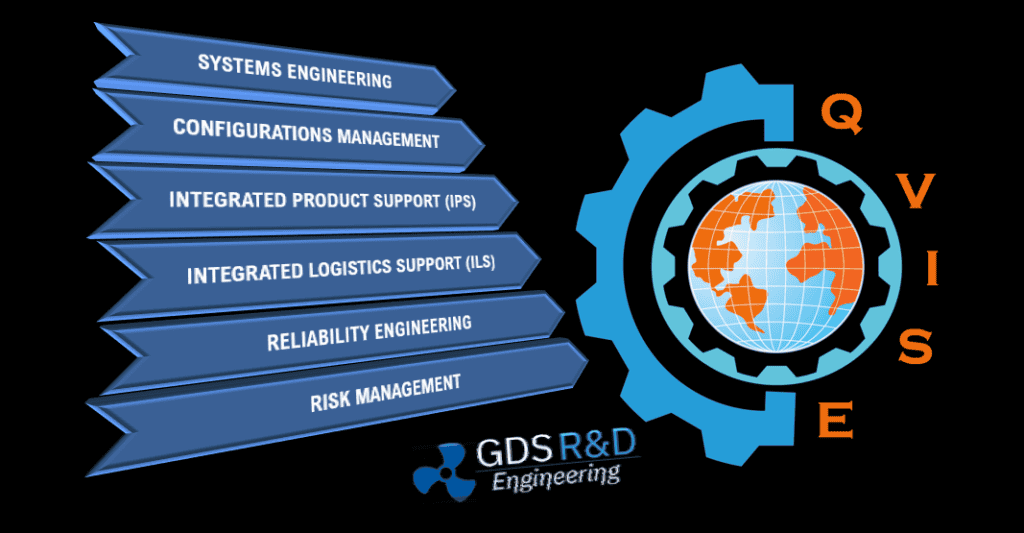
Integrated Product Support (IPS), Integrated Logistics Support (ILS), Systems, Engineering, and Reliability Engineering courses are certification training courses conducted by Quality Vertex Integrated Systems Engineering (QVISE), Global Dynamic Systems, Inc., and GDS Engineering R&D, Inc. through international collaboration. You can register for two weeks for all modules OR register only for the module(s) you have an interest in. All course instructors are international experts, led by Dr Ismail Cicek.

Integrated Product Support (IPS), Integrated Logistics Support (ILS), Systems, Engineering, and Reliability Engineering courses are certification training courses conducted by Quality Vertex Integrated Systems Engineering (QVISE), Global Dynamic Systems, Inc., and GDS Engineering R&D, Inc. through international collaboration. You can register for two weeks for all modules OR register only for the module(s) you have an interest in. All course instructors are international experts, led by Dr Ismail Cicek.
Training CourseDurationSchedule
IPS and ILS2.5 daysDay 1: 8:30 – 12:00 | 13:00 – 16:30
Day 2: 8:30 – 12:00 | 13:00 – 16:30
Day 3: 8:30 – 12:00
Reliability Engineering2.5 daysDay 1: 13:00 – 16:30
Day 2: 8:30 – 12:00 | 13:00 – 16:30
Day 3: 8:30 – 12:00 | 13:00 – 16:30

IPS/ILS Training Modules

Module 1: Introduction to Integrated Product Support (IPS) and Integrated Logistics Support (ILS)
Module 2: Product Support Analysis (PSA) Insight
Module 3: Life Cycle Costing (LCC), Availability, and Maintainability Analysis
Module 4: Logistics Product Data (LPD)
Module 5: Synergizing Maintenance Strategies
Module 6: Level Of Repair Analysis (LORA), Producibility, and Supportability Assessment
Module 7: Supply Support, Provision & Obsolescence Management
Module 8: Packaging, Handling, Storage, & Transport (PHS&T
Module 9: ILS / IPS Contact Management

Read the details on the IPS/ILS Training using the following link: https://www.globaldynamicsystems.com/ips-ils-training/

Reliability Engineering Training Modules

Module 1: Introduction to Reliability & Supportability Engineering
Module 2: Reliability Governance & Contractual Management
Module 3: Reliability Program Reviews & Failure Review Board (FRB)
Module 4: Reliability Modeling & Allocation
Module 5: Reliability Prediction
Module 6: Failure Modes, Effects & Criticality Analysis (FMECA) and Failure Reporting Analysis & Corrective Action System (FRACAS)
Module 7: Reliability Growth (RGT) & Environmental Stress Screening (ESS)
Module 8: Reliability Qualification & Production Reliability Acceptance Testing (RQT & PRAT)

Read the details on the Reliability Engineering Training using the following link: https://www.globaldynamicsystems.com/training-on-reliability-engineering/

$2800 / 1 person registration for 5 days (two courses)

The registration cost for one training session (2.5 days) is 1450 USD. Early bird registrations (earlier than one month before the training) will receive a 10% discount.

QVISE (Quality Vertex Integrated System Engineering)

View Organizer Website

Online Training via ZOOM

ZOOM Link and Training Material will be shared with the registrants
View Venue Website