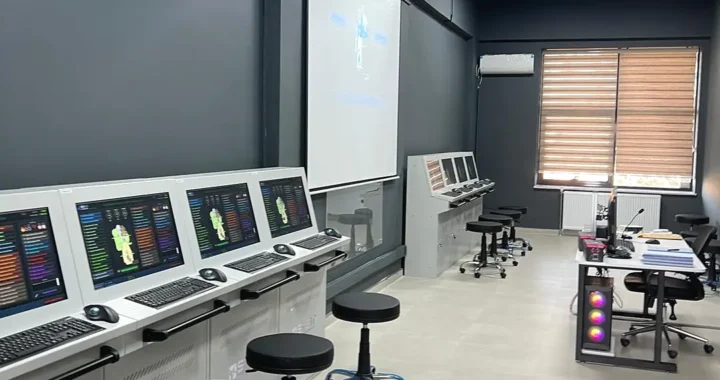
GDS Engineering R&D has expanded the capabilities of its Ship Engine Room Simulator (SERS™) with the addition of a new four-stroke engine room simulation module, developed to provide a realistic training environment for medium-speed propulsion systems and modern ship machinery operations.
The new module has also been installed at Sakarya University of Applied Sciences (SUBÜ), Maritime Vocational School, supporting applied maritime engineering education with simulator-based engine room training.
A Digital Twin Based on MEDKON MERSIN
The new SERS™ configuration is based on the machinery and operational characteristics of MEDKON MERSIN, a container vessel of approximately 140–150 metres, creating a digital-twin-based training environment that reflects a real ship configuration.
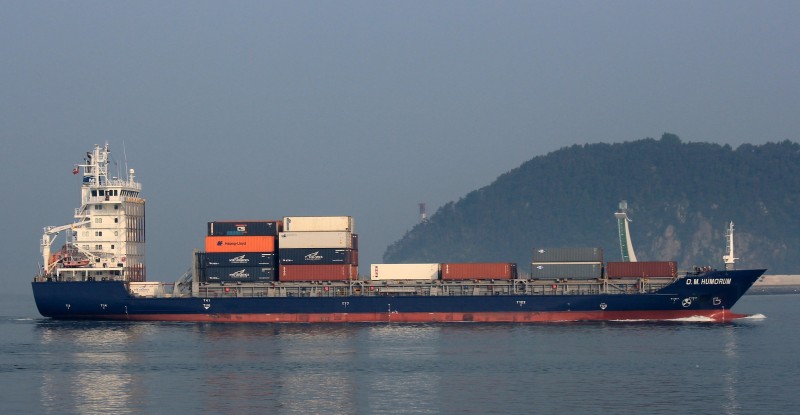
At the centre of the propulsion model is an 8-cylinder MAK43MC four-stroke main engine, combined with a Controllable Pitch Propeller (CPP) propulsion system.
This configuration gives trainees the opportunity to work with a propulsion arrangement that differs significantly from conventional slow-speed, fixed-pitch systems and to understand the relationship between main engine operation, propulsion control, CPP response and supporting engine room systems.
Practical Four-Stroke Engine Room Training with SERS™
With the new module, SERS™ now provides an additional platform for training on four-stroke main engine operations, auxiliary systems, propulsion control, alarms, operational procedures and fault scenarios.
The simulator allows students and marine engineers to observe system behaviour, practise operating procedures and investigate abnormal conditions within a controlled environment before facing similar situations onboard.
The addition of the four-stroke module further expands the range of vessel and machinery configurations available within SERS™, strengthening its use for hands-on, scenario-based and competency-oriented maritime training.
The installation at SUBÜ also represents another step in GDS Engineering R&D’s cooperation with maritime education institutions and its ongoing development of realistic simulation technologies based on actual vessel and machinery configurations.