GDS SERS is now in use by a Malasian Maritime Institution

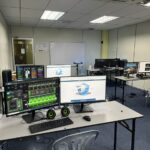
SERS, which is currently being used in both distance and face-to-face training in a training center established in Malta, ITU Northern Cyprus Department of Marine Engineering, and Yıldız Technical University Faculty of Naval Architecture and Maritime Studies in Ship Engine Room Simulator courses, has also started to be used in an educational institution in Malaysia. SERSTM, which will begin being used in the Engine Room Team Management training of personnel currently working on ships in Malaysia this summer, will be used in training 3rd and 4th-year maritime candidates at the beginning of the fall 2022 semester. For SERS, which is planned to be installed in stages, a system was established on June 22, 2022, where six students can receive training, and the installation will continue by increasing the number of students.
Akademi Maritim Penjana ilmu

SERS™, which was successfully installed via remote access to an educational institution in Malaysia, has also become the new favorite of maritime trainers in Malaysia. According to Çağrı Berk Güler, who coordinated the stages during the installation and is part of the group that developed SERS™, one of the biggest reasons for the preference of educational institutions and companies abroad is that remote installation can be carried out and the program is elementary to ensure compatibility with Windows-based systems.
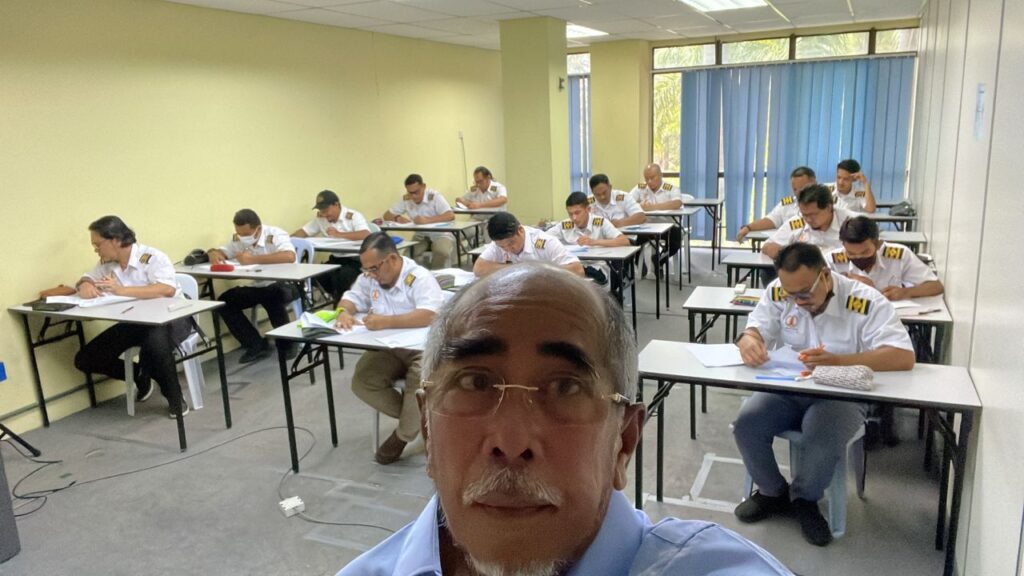
The simulator, made ready for use with full remote access at the educational institution in Malaysia, was installed on the educational computers and then used in training. The institution said they decided to use SERS™ remotely and liked it very much. After the pilot class application, they planned to use the software for all laboratory classes.

Chief Engineer Nazir Hamzah converted the classroom into an Engine Room Team Management Training Lab using SERS™. More components and licenses will be added incrementally. This is a great approach for starting education and training.

About SERS

SERS™ covers all training given using an engine room simulator, as specified in IMO STCW 2010 qualification tables. Also covering IMO Model Course 2.07 (2017) Applications, SERS™ has started to make a name for itself, especially abroad, and has attracted the attention of the maritime sector in the Turkish market, as it offers many academic and practical applications that are not available in simulators currently used in training institutions. The essential features of SERS™, which is developed in a modular structure that can be installed in many different configurations and supplied with various budgets, its advantages and differences from competitor products and application configuration types are explained in detail on the GDS company website.
Ship Engine Room Simulator (ERS) SERS GDS Engineering R&D IMO STCW 2010, Engine Performance, Main Diesel Engine, Marine, Maritime, IMO Model Course 2.07. Certified by ClassNK. ITU Maritime Faculty. Yıldız Technical University. Competencies. Operation and Management Level. Education and Training. Assessment of Marine Engineers. Troubleshooting with Fault Tree Scnearious and Analysis Reporting. Objective Assessment. Nippon Kaiji Kyokai.High Voltage Training Functions 6600 VAC. Ship Propulsion Systems. Maritime Education and Training. Main Engine Performance. Sunken Diagrams. Energy Efficiency. Marine Engineering. Effect of Draft Change in the Ship Main Engine Performance Parameters. Management Level Training Exercices, Marine Engineering Education and Training. SERS Trademark

Operating Marine Diesel Engines – IMO STCW 2010 Competency Requirements

Operation of the engine room machinary and systems: Watch GDS Engine Room Simulator Demonstration Videos

Watch the videos demonstrated by our students. Operation of the engine room machinary and system in accordance with the IMO Compentency Requirements.

Thanks fr watching and please communicate with us if you would like to have this training system be incorporated in your training programms.

Ship Engine Room Simulator (ERS) SERS GDS Engineering R&D IMO STCW 2010, Engine Performance, Main Diesel Engine, Marine, Maritime, IMO Model Course 2.07. Certified by ClassNK. ITU Maritime Faculty. Yıldız Technical University. Competencies. Operation and Management Level. Education and Training. Assessment of Marine Engineers. Troubleshooting with Fault Tree Scnearious and Analysis Reporting. Objective Assessment. Nippon Kaiji Kyokai.High Voltage Training Functions 6600 VAC. Ship Propulsion Systems. Maritime Education and Training. Main Engine Performance. Sunken Diagrams. Energy Efficiency. Marine Engineering. Effect of Draft Change in the Ship Main Engine Performance Parameters. Management Level Training Exercices, Marine Engineering Education and Training. SERS Trademark

Effect of Weather on the Marine Propulsion Engine Performance Onboard a Ship

IMO Model Course Exercise recommends students learn the weather change effect on engine performance.

GDS Engineering R&D developed a modern Engine Room Simulator (ERS) and it is in use by various research and training institutions. GDS ERS, called SERS, includes all engine room, ship, and environmental paramaters to demonstrate the weather effect to engine performance while onboard systems are maintaining their status with the displayed parameters. This scenario study is a predefined and set in the ERS for instructors to directly apply in their STCW Management Level Exercises. Student Workbooks accomodate this exercise with specficic forms to fill by the trainees.

Ship Engine Room Simulator (ERS) SERS GDS Engineering R&D IMO STCW 2010, Engine Performance, Main Diesel Engine, Marine, Maritime, IMO Model Course 2.07. Certified by ClassNK. ITU Maritime Faculty. Yıldız Technical University. Competencies. Operation and Management Level. Education and Training. Assessment of Marine Engineers. Troubleshooting with Fault Tree Scnearious and Analysis Reporting. Objective Assessment. Nippon Kaiji Kyokai.High Voltage Training Functions 6600 VAC. Ship Propulsion Systems. Maritime Education and Training. Main Engine Performance. Sunken Diagrams. Energy Efficiency. Marine Engineering. Effect of Draft Change in the Ship Main Engine Performance Parameters. Management Level Training Exercices, Marine Engineering Education and Training. SERS Trademark

A Study of the Main Propulsion Engine Performance with Ship’s Draft Change

Purpose: Exercise the weather effect to engine performance using the Ship ERS. Generate a report with capturing the images using SERS GUI panels and tools provided. Note that this exercise is generated as part of the IMO Model Course 2.07 (2017 Edition) exercises. This training exercise was developed as part of the IMO STCW 2010 Management Level objectives using the Model Course 2.07 guidelines ans steps. 

Note: This classroom exercise was provided in this page as an example. Click here to visit the Ship Engine Room Simulator product to read more.

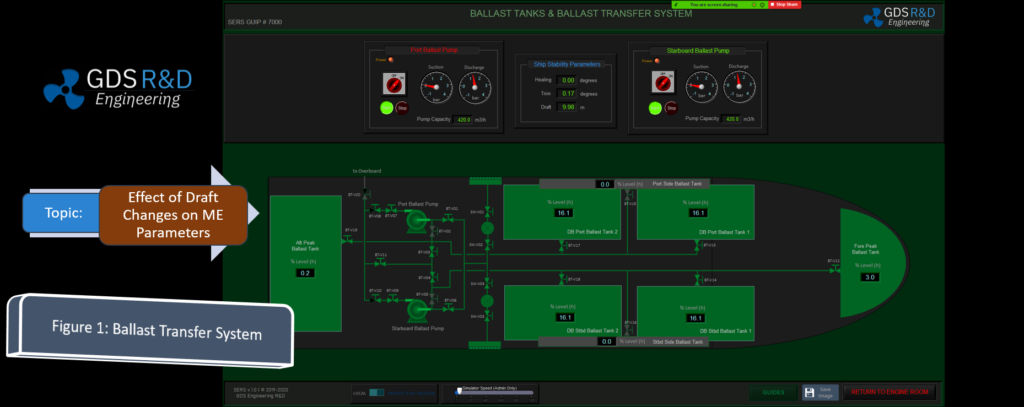
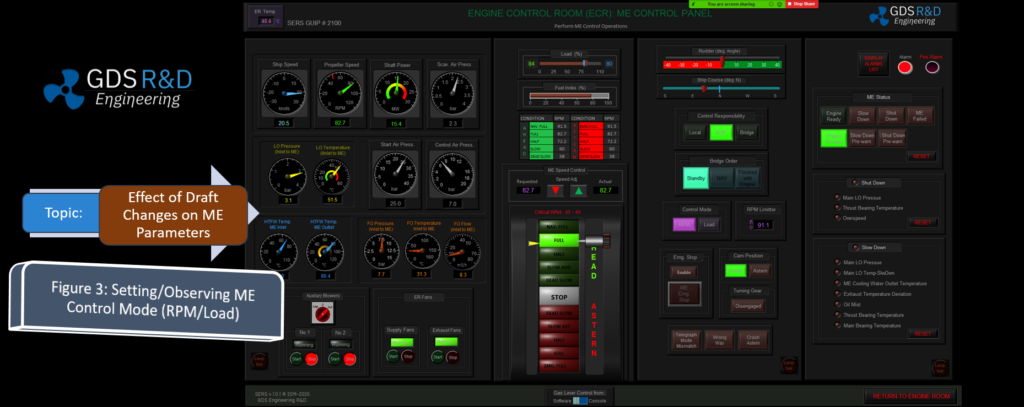
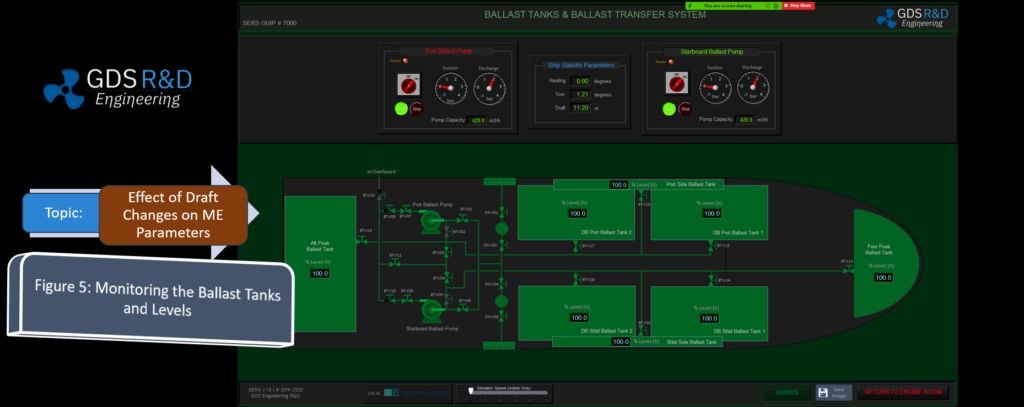
Step 1: ERS is operated in Navigation Mode and Ballast Transfer System is lined up for ballast operations. Draft is Low (i.e. d=9 m.)

Effect of Draft Change in the Ship Main Engine Performance Parameters IMO Model Course 2.07, IMO, STCW 2010, Management Level Training Exercices, Marine Engineering Education and Training, Maritime. GDS Engineering R&D, SERS, Trademark

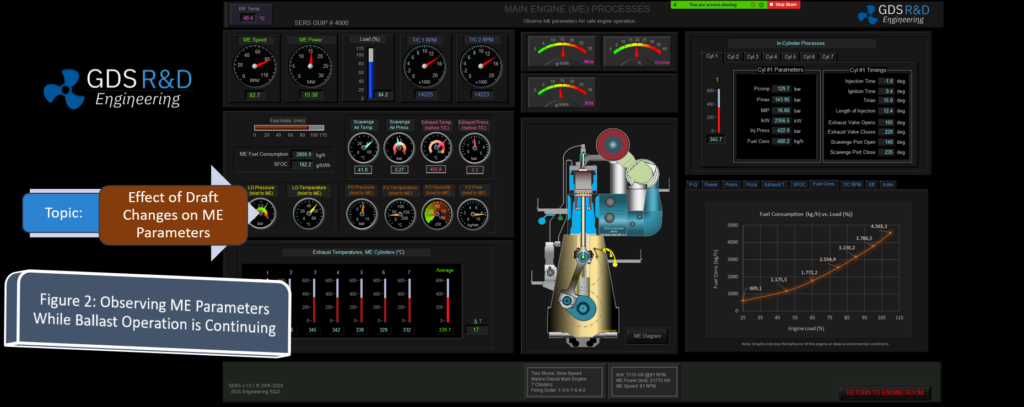
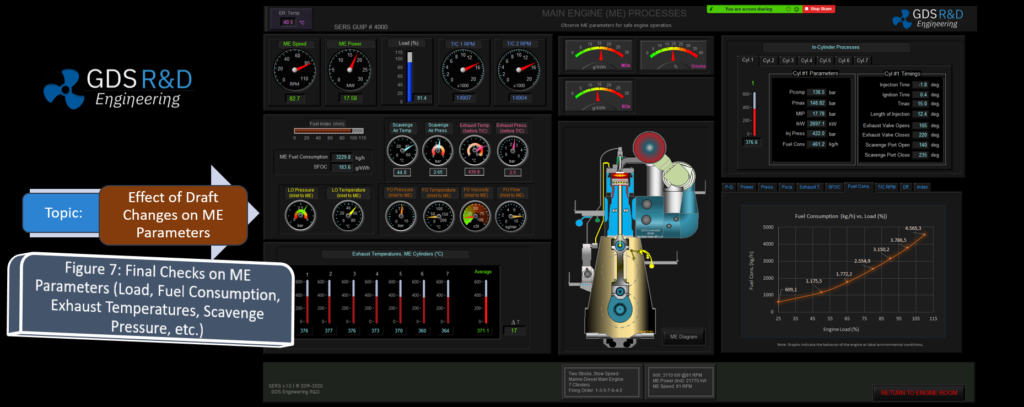
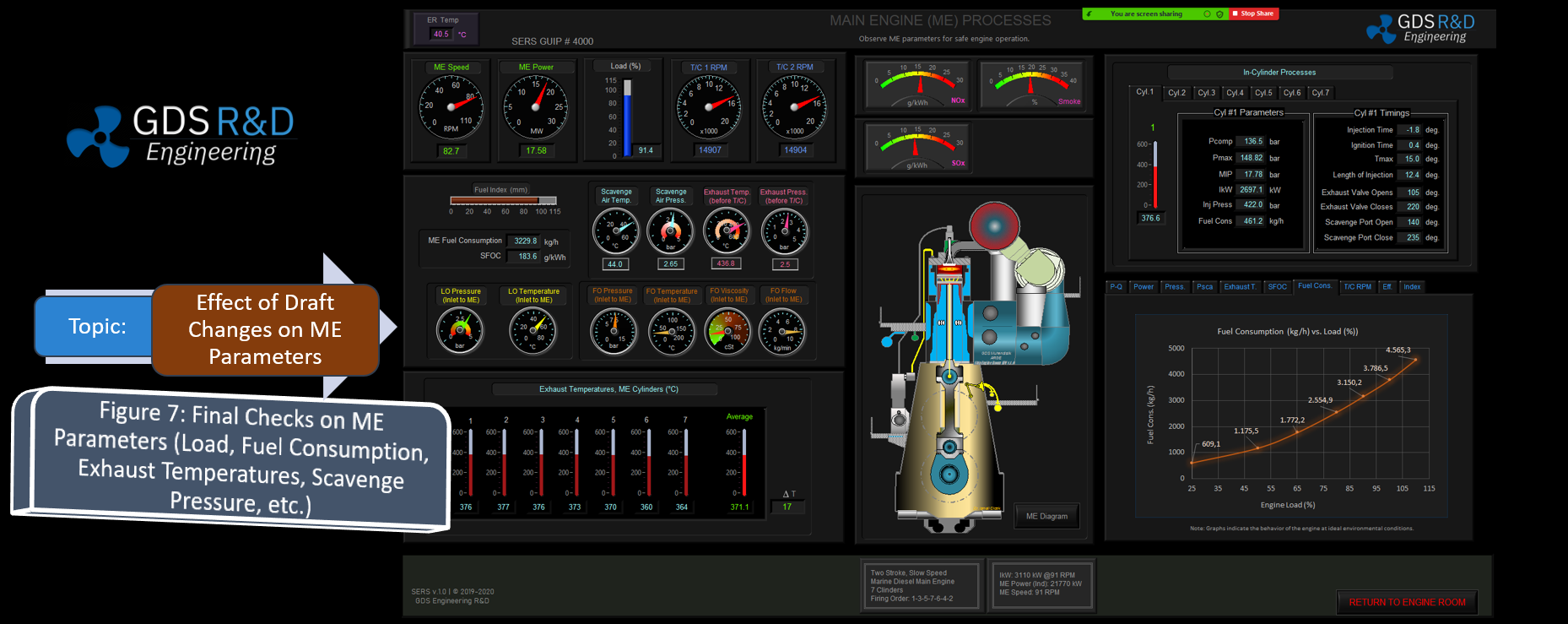
Step 2: ME Processes GUI Panel displays the ME Parameters while the draft is increasing. Check Figure 2 for that the the baseline (sea test) data/graphs are displayed. Being able to understand the ME performance graphs are important in this exercise. 

Effect of Draft Change in the Ship Main Engine Performance Parameters IMO Model Course 2.07, IMO, STCW 2010, Management Level Training Exercices, Marine Engineering Education and Training, Maritime. GDS Engineering R&D, SERS, Trademark

Step 3: Ensure the  control of the main engine is set to “RPM”.

Effect of Draft Change in the Ship Main Engine Performance Parameters IMO Model Course 2.07, IMO, STCW 2010, Management Level Training Exercices, Marine Engineering Education and Training, Maritime. GDS Engineering R&D, SERS, Trademark

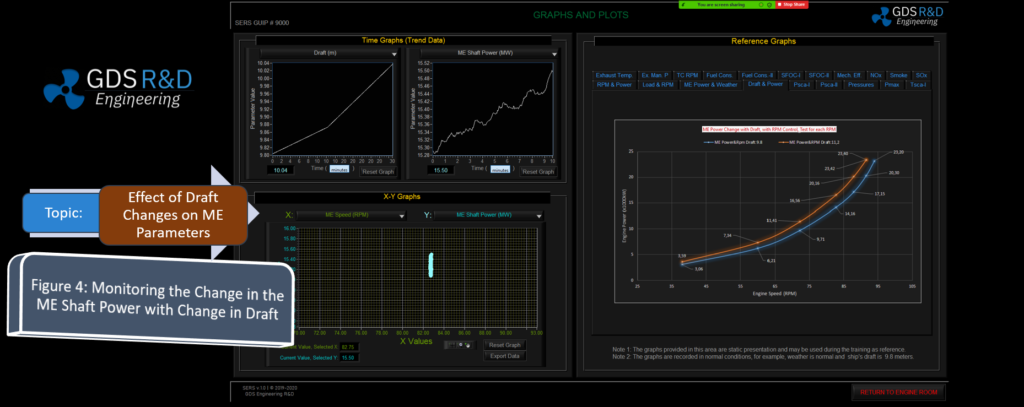
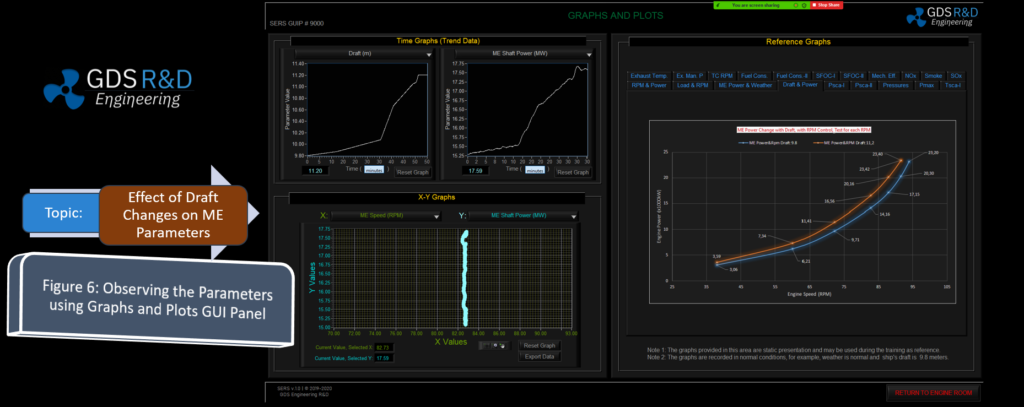
Step 4: Graphs and Plots GUI Panel displays the trend data for the selected parameters. In this exercise, it is important to plot the draft and ME Power. Additionally, it is important to select the ME Power versus ME RPM in the X-Y plot area to see the ME Power change while the RPM is controlled.

Effect of Draft Change in the Ship Main Engine Performance Parameters IMO Model Course 2.07, IMO, STCW 2010, Management Level Training Exercices, Marine Engineering Education and Training, Maritime. GDS Engineering R&D, SERS, Trademark

Step 5: Status of the Ballast Tanks and Levels are important to observe.

Effect of Draft Change in the Ship Main Engine Performance Parameters IMO Model Course 2.07, IMO, STCW 2010, Management Level Training Exercices, Marine Engineering Education and Training, Maritime. GDS Engineering R&D, SERS, Trademark

Step 6: Students should be able to interpret time (trend) and X-Y graphs for this operation, as part of the MANAGEMENT LEVEL exercise objectives.

Effect of Draft Change in the Ship Main Engine Performance Parameters IMO Model Course 2.07, IMO, STCW 2010, Management Level Training Exercices, Marine Engineering Education and Training, Maritime. GDS Engineering R&D, SERS, Trademark

Step 7: Complete the exercise with noting the ME parameter changes.

Effect of Draft Change in the Ship Main Engine Performance Parameters IMO Model Course 2.07, IMO, STCW 2010, Management Level Training Exercices, Marine Engineering Education and Training, Maritime. GDS Engineering R&D, SERS, Trademark

Ship Engine Room Simulator (ERS) SERS GDS Engineering R&D IMO STCW 2010, Engine Performance, Main Diesel Engine, Marine, Maritime, IMO Model Course 2.07. Certified by ClassNK. ITU Maritime Faculty. Yıldız Technical University. Competencies. Operation and Management Level. Education and Training. Assessment of Marine Engineers. Troubleshooting with Fault Tree Scnearious and Analysis Reporting. Objective Assessment. Nippon Kaiji Kyokai.High Voltage Training Functions 6600 VAC. Ship Propulsion Systems. Maritime Education and Training. Main Engine Performance. Sunken Diagrams. Energy Efficiency. Marine Engineering. Effect of Draft Change in the Ship Main Engine Performance Parameters. Management Level Training Exercices, Marine Engineering Education and Training. SERS Trademark

Capture GDS Vision in the Engine Room Simulator Development

In recent years, the maritime industry has seen a significant push towards technological advancement and stricter safety and operational standards. As vessels become more sophisticated and regulations evolve, the role of well-trained onboard maritime personnel becomes increasingly essential. In this context, the SIRE 2.0 program and GDS Ship Engine Room Simulator represent pioneering tools designed to equip maritime crews with deep technical skills necessary to meet new demands and improve the safety and efficiency of maritime operations.

Understanding SIRE 2.0 and Its Impact on Maritime Training

The Ship Inspection Report Programme (SIRE) has long been a fundamental tool in maintaining safety and operational standards across the maritime industry, particularly for tanker operations. Launched by the Oil Companies International Marine Forum (OCIMF), the program provides a comprehensive inspection system that evaluates the condition and operations of vessels. However, with the growing complexity of modern vessels and stricter environmental and safety regulations, the traditional SIRE program required enhancements to address these evolving needs. This led to the development of SIRE 2.0, an upgraded version that integrates data-centric inspection methodologies with a stronger focus on crew competency, operational excellence, and technical skills.

One of the key features of SIRE 2.0 is its focus on assessing the competency of crew members in handling complex equipment and operations. Rather than focusing solely on vessel condition, SIRE 2.0 evaluates the practical skills, knowledge, and decision-making abilities of onboard personnel. This ensures that crew members are not only familiar with equipment and operational standards but are also capable of responding effectively to critical situations.

The emphasis on crew competency in SIRE 2.0 aligns with the industry’s shift toward a human-centered approach in safety and operational excellence. This paradigm shift means that training programs must go beyond traditional instruction and delve into more practical, technology-driven skills, which is where simulators like the GDS Ship Engine Room Simulator come into play.

The Role of the GDS Ship Engine Room Simulator in Skill Development

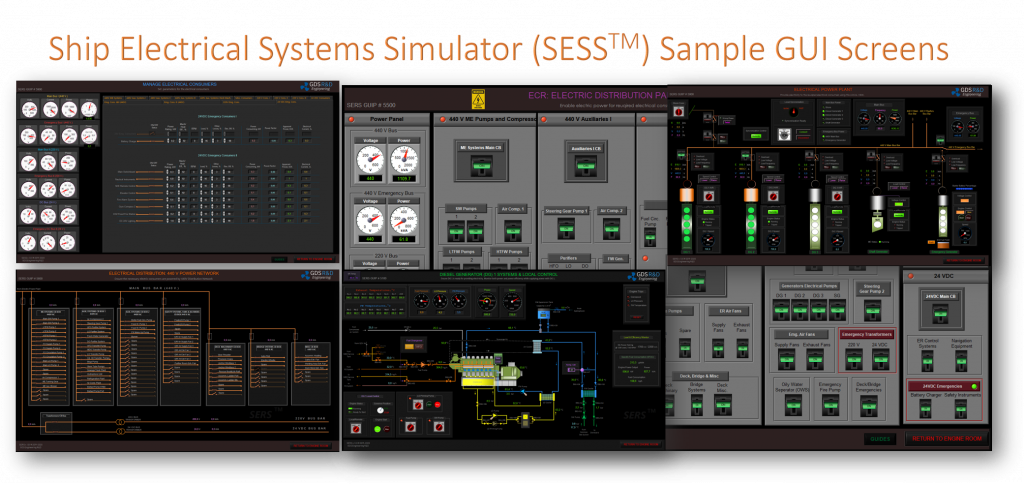
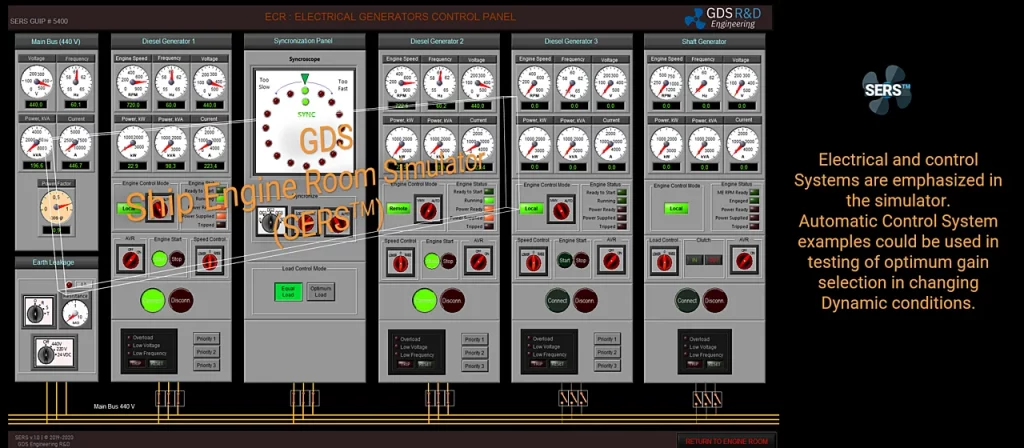
The GDS Ship Engine Room Simulator is an advanced training tool that replicates the engine room environment of modern vessels, providing maritime personnel with hands-on experience in a controlled setting. This simulator covers a wide range of critical systems found in ship engine rooms, including propulsion, auxiliary machinery, electrical systems, and emergency protocols. By using the simulator, crew members can practice their skills, refine their decision-making processes, and gain confidence in handling complex systems without the risks associated with real-world errors.

The simulator allows trainees to engage in realistic scenarios, such as equipment failures, power management issues, and environmental challenges. This training is invaluable in helping them develop deep technical skills needed to respond effectively under pressure. Given the increasing complexity of ship machinery, which often integrates digital and automated controls, such simulator-based training ensures that personnel are well-prepared for both routine and emergency operations.

Developing Deep Technical Skills with SIRE 2.0 and the GDS Simulator

By integrating SIRE 2.0’s competency standards with the practical capabilities of the GDS Ship Engine Room Simulator, maritime training institutions can foster deep tech skills that are essential in today’s high-stakes maritime environment. Training programs using these tools can address various aspects, including:

Operational Readiness: By simulating real-life engine room conditions, the GDS simulator enables personnel to develop an intuitive understanding of systems and processes, which aligns with SIRE 2.0’s focus on crew readiness and situational awareness.

Crisis Management and Decision-Making: The simulator provides scenarios that replicate emergency situations, allowing trainees to practice crisis response, prioritize actions, and make critical decisions under pressure.

Technical Proficiency: The GDS simulator helps personnel develop advanced skills in troubleshooting and maintaining complex machinery, which is crucial for achieving SIRE 2.0’s standards for operational excellence.

Environmental Compliance: With a growing emphasis on environmental regulations, the simulator enables crew members to familiarize themselves with compliance standards and practice procedures that reduce environmental impact, such as optimizing fuel usage and managing waste effectively.

Safety Protocols: Through realistic training scenarios, the simulator reinforces safety protocols, ensuring that personnel can identify and mitigate risks, which is a core component of the SIRE 2.0 inspection program.