Summary
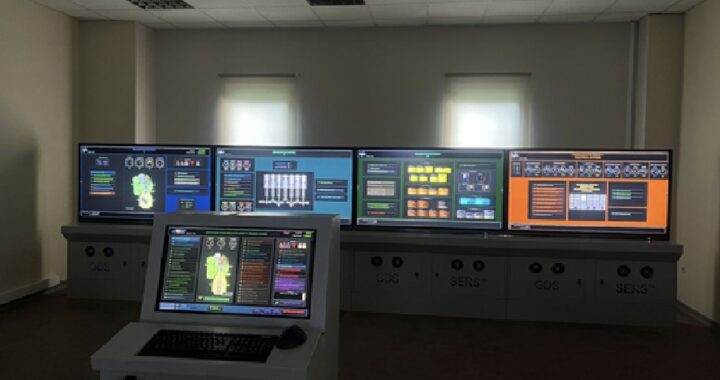
The GDS Ship Engine Room Simulator is an advanced, fully immersive maritime training solution designed to replicate a modern ship’s engine room with high-fidelity 3D modeling, real-time system behavior, and interactive operational control.
Built to exceed conventional engine room simulators, the platform integrates:
-
Ultra-realistic 3D walkthrough environments
-
Deep, system-level interactive 3D machinery models
-
Real-time physics-based system behavior
-
Emergency and fault simulation capabilities
-
Instructor-driven and AI-supported training modes
The simulator bridges the gap between theoretical instruction and onboard practical competence, delivering a safe, scalable, and highly engaging training environment.
Key Competitive Strengths
The GDS Ship Engine Room Simulator distinguishes itself through:
-
True interactive 3D mechanics rather than passive animation
-
System-level realism with dynamic cause-and-effect modeling
-
High spatial fidelity for operational familiarity
-
Integrated emergency escalation logic
-
Instructor-grade assessment tools
-
Advanced visualization modes for engineering education
-
Multi-user crisis management capability
Vision & Objectives
The GDS Ship Engine Room Simulator aims to:
-
Provide authentic operational experience without onboard risk
-
Enhance situational awareness and spatial familiarity
-
Develop procedural competence and decision-making under pressure
-
Improve team coordination and communication
-
Enable advanced troubleshooting and fault diagnosis training
The system is engineered for maritime academies, shipping companies, training centers, and marine engineering departments seeking advanced-level simulation capability.
High-Fidelity 3D Walkthrough Experience
Fully Immersive Engine Room Environment
The simulator offers a photorealistic, full-scale 3D engine room that can be freely explored. Users navigate the space in:
-
First-person mode (engineer perspective)
-
Instructor observation mode
-
Multi-user collaborative mode
-
Optional VR-enabled immersive mode
Every deck, compartment, and equipment area is spatially accurate and designed with realistic lighting, acoustics, and environmental effects.
Spatial Realism & Environmental Effects
To enhance immersion, the 3D walkthrough incorporates:
-
Dynamic lighting variations (normal, emergency lighting, blackout)
-
Ambient engine room sounds (machinery noise, alarms, ventilation)
-
Temperature zone simulation
-
Steam leaks, smoke effects, and vibration simulation during faults
-
Realistic confined-space visibility conditions
These features promote situational awareness and environmental familiarity.
Intelligent Navigation & Interaction
The walkthrough includes:
-
Context-aware interaction prompts
-
Interactive equipment tagging and identification
-
Guided training paths for structured learning
-
Free exploration mode for familiarization
-
Safety hazard highlighting during training sessions
Users can:
-
Approach equipment
-
Open access panels
-
Climb ladders and move between decks
-
Access machinery platforms
-
Interact with control panels in real scale
The environment responds dynamically to operational changes (e.g., system startup alters sound and vibration levels).
Advanced 3D Model Interactions
Fully Interactive Machinery Models
Each major engine room component is modeled in great detail, including:
-
Main engine
-
Auxiliary engines
-
Boilers
-
Purifiers
-
Pumps and compressors
-
Fuel and lubrication systems
-
Cooling water systems
-
Electrical generators and switchboards
Every system is:
-
Functionally simulated
-
Interconnected logically
-
Responsive to user inputs
-
Fault-reactive
Exploded Views & Layered Inspection
The simulator provides advanced visualization modes:
-
Exploded mechanical views
-
Sectional cross-sections
-
Transparent overlay modes
-
Flow path visualization (fuel, air, exhaust, cooling water)
-
Animated component operation
These modes allow trainees to:
-
Understand internal mechanical movements
-
Visualize thermodynamic processes
-
Identify part-level functionality
-
Analyze component wear and failure points
Real-Time System Feedback
When users manipulate valves, switches, or control parameters:
-
Gauges respond instantly
-
Pressure and temperature curves change dynamically
-
Sound characteristics vary
-
System alarms trigger automatically if limits are exceeded
All interactions are governed by realistic system logic rather than scripted animations.
Valve-Level & Component-Level Control
Trainees can:
-
Open/close individual valves
-
Start/stop pumps and generators
-
Adjust fuel injection timing
-
Manage cooling flows
-
Synchronize generators
-
Execute start-up and shutdown sequences
Incorrect sequences result in:
-
Alarm conditions
-
System instability
-
Simulated mechanical damage
-
Performance degradation
This creates a true cause-and-effect learning experience.
Operational & Emergency Training Scenarios
Standard Operating Procedures
The simulator includes:
-
Cold start to full operation
-
Load change management
-
Generator synchronization
-
Bunker transfer operations
-
Boiler operation management
Procedures must be executed correctly to achieve stable system performance.
Emergency Response Simulation
Advanced fault scenarios include:
-
Main engine failure
-
Lubrication system contamination
-
Cooling water loss
-
Electrical blackout
-
Fire in engine room
-
Fuel leak and pressure drop
-
Pump cavitation
-
Turbocharger malfunction
Each scenario can escalate if not handled properly, reinforcing critical thinking and prioritization skills.
Cascading Failure Logic
The system models realistic failure propagation:
-
Valve misalignment → pressure imbalance
-
Pressure imbalance → pump overload
-
Pump overload → electrical trip
-
Electrical trip → blackout
This dynamic interaction enhances system-thinking capability.
Instructor & Assessment Module
Instructor Control Panel
Instructors can:
-
Inject faults in real time
-
Modify system parameters
-
Monitor trainee actions
-
Replay sessions
-
Pause and debrief
-
Assess procedural compliance
Performance Analytics
The simulator tracks:
-
Reaction time
-
Procedural correctness
-
Safety violations
-
Communication effectiveness
-
Troubleshooting accuracy
Reports are generated automatically for evaluation and certification purposes.
Multi-User Collaboration & Team Training
The GDS Simulator supports:
-
Bridge-to-engine communication simulation
-
Multi-engineer role assignments
-
Chief engineer / duty engineer scenarios
-
Crisis coordination drills
Voice communication integration enhances realism and team performance assessment.
AI-Supported Learning Enhancements
Optional AI integration enables:
-
Adaptive difficulty levels
-
Intelligent fault generation
-
Real-time hints for beginners
-
Personalized feedback reports
-
Predictive skill gap analysis
The system adjusts complexity based on trainee performance progression.
Hardware & Deployment Flexibility
The platform is deployable via:
-
Desktop simulation stations
-
Multi-screen immersive labs
-
VR headsets for deep immersion
-
Cloud-based training modules
-
Hybrid classroom configurations
This flexibility allows institutions to scale training capacity efficiently.
The GDS Ship Engine Room Simulator represents a next-generation maritime training solution that goes beyond traditional simulation. Through immersive 3D walkthroughs, interactive machinery models, realistic system behavior, and intelligent fault management, it prepares marine engineers for real-world operational challenges with unprecedented depth and realism.
It is not merely a simulator—it is a complete engine room training ecosystem.
Future Development Roadmap
Planned enhancements include:
-
Digital twin integration with real vessel data
-
Augmented reality maintenance mode
-
Haptic feedback interfaces
-
Advanced thermodynamic visualization layers
-
AI-based predictive maintenance training modules
Benefits & Impact
For Maritime Academies
-
Reduced onboard training dependency
-
Enhanced competency-based certification
-
Improved exam preparedness
For Shipping Companies
-
Reduced operational risk
-
Better emergency readiness
-
Standardized crew training
For Engineers
-
Confidence in system handling
-
Strong troubleshooting capability
-
Deep understanding of machinery behavior