MIL-STD-810H Online Training: Environmental Considerations (and Testing) of Military Equipment
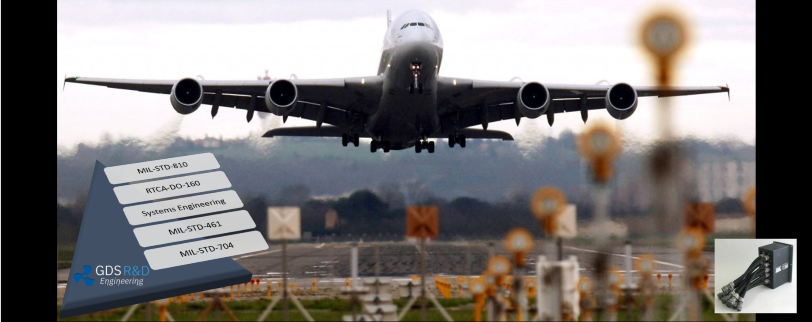
MIL-STD-810H Online Training: Environmental Considerations (and Testing) of Military Equipment
MIL-STD-810H Online Training: Environmental Considerations (and Testing) of Military Equipment
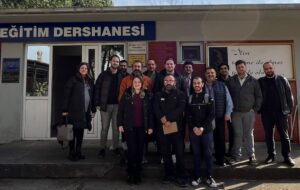
Training No.3 on Environmental Testing of Military Equipment.

On July 8, 2023, Yıldız Technical University Faculty of Naval Architecture and Maritime Faculty Member Prof. Dr. Ahmet Dursun Alkan visited to see the Tanker Model SERS-T™, which will be the product of SERS™, and the Ship Engine Room SERS™, which is being installed at ITU Faculty of Maritime.
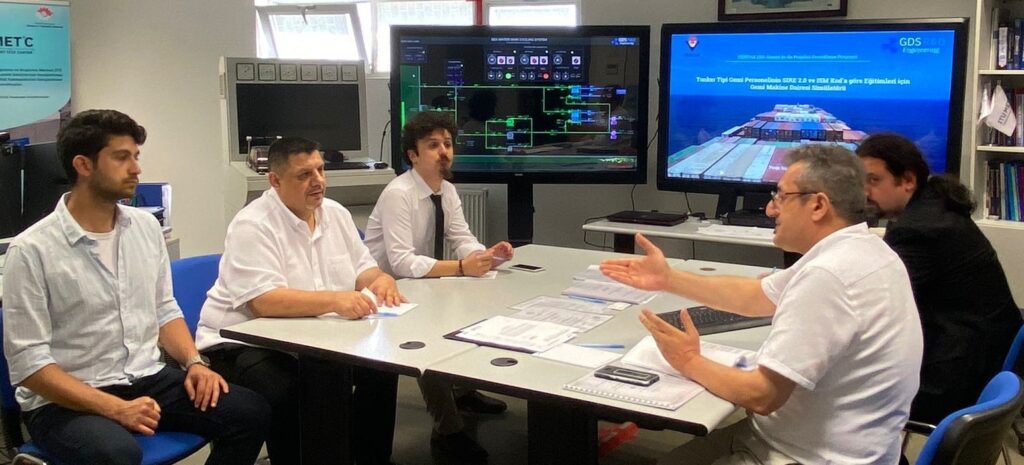
During the meeting at the ITU Maritime Faculty where SERS™, developed by GDS Engineering ARGE, was developed, SERS-T™, which is being developed for the SIRE 2.0 and ISM Code-Based Training of Tanker Type Ship Personnel within the scope of the TÜBİTAK 1501 Project, was introduced. With SERS-T™, a new system will be created to train sailors who will board the Tanker Ship. SERS™, which is actively used during the introduction, was also introduced.
In the developing simulator, Tanker ship machinery systems will be mathematically modeled and Graphical User Interface (GUI) Panels will be designed. The developed simulator will be compatible with SIRE 2.0 and ISM Codes required in Tanker Ships, and seafarers who will work on the Tanker Ship will be able to perform their training with Operation and Management level training scenarios.
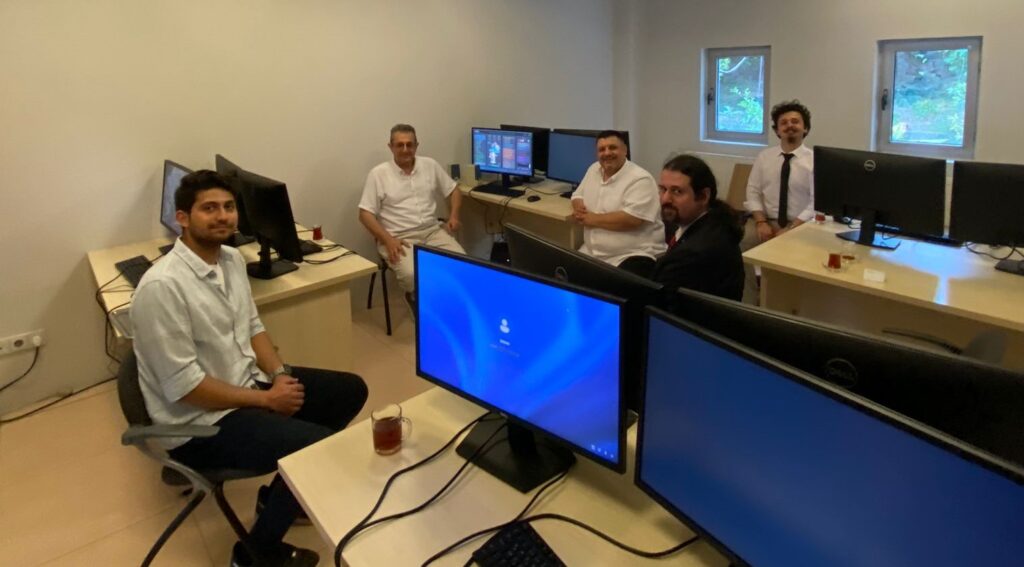
During the visit, the Simulator Center for SERS™, which is being established at ITU Maritime Faculty, was toured.
SERS™ has been pre-installed at ITU Maritime Faculty. SERS™, which was brought to ITU in collaboration with GDS Engineering R&D and SimBT, was highly appreciated by Assoc. Prof. Dr. Ahmet Dursun Alkan. He also shared his own views and recommendations for SERS™ and SERS-T™ with Dr. İsmail Çiçek.
SERS™, which is being installed at ITU Maritime Faculty Simulator Center, will provide training to students from Turkish Maritime schools at ITU Maritime Faculty, thanks to its structure that keeps up with technology for education and its rapid adaptation to today’s ship models, and will ensure that the sector is trained with conscious sailors who are knowledgeable about ship engine rooms.
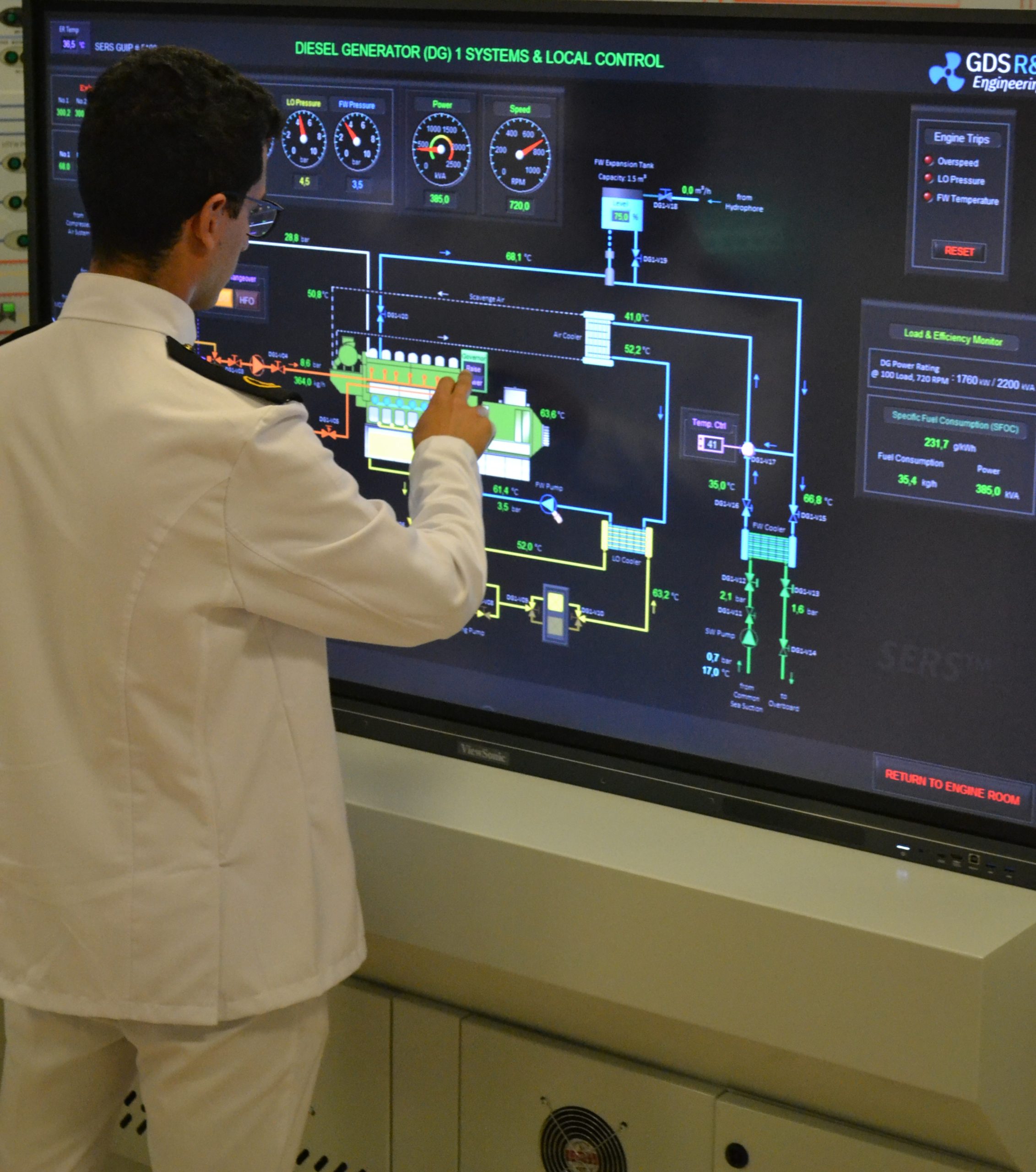
The GDS Ship Engine Room Simulator is an advanced training tool that replicates the engine room environment of modern vessels, providing maritime personnel with hands-on experience in a controlled setting. This simulator covers a wide range of critical systems found in ship engine rooms, including propulsion, auxiliary machinery, electrical systems, and emergency protocols. By using the simulator, crew members can practice their skills, refine their decision-making processes, and gain confidence in handling complex systems without the risks associated with real-world errors.
The simulator allows trainees to engage in realistic scenarios, such as equipment failures, power management issues, and environmental challenges. This training is invaluable in helping them develop deep technical skills needed to respond effectively under pressure. Given the increasing complexity of ship machinery, which often integrates digital and automated controls, such simulator-based training ensures that personnel are well-prepared for both routine and emergency operations.
By integrating SIRE 2.0’s competency standards with the practical capabilities of the GDS Ship Engine Room Simulator, maritime training institutions can foster deep tech skills that are essential in today’s high-stakes maritime environment. Training programs using these tools can address various aspects, including:
Operational Readiness: By simulating real-life engine room conditions, the GDS simulator enables personnel to develop an intuitive understanding of systems and processes, which aligns with SIRE 2.0’s focus on crew readiness and situational awareness.
Crisis Management and Decision-Making: The simulator provides scenarios that replicate emergency situations, allowing trainees to practice crisis response, prioritize actions, and make critical decisions under pressure.
Technical Proficiency: The GDS simulator helps personnel develop advanced skills in troubleshooting and maintaining complex machinery, which is crucial for achieving SIRE 2.0’s standards for operational excellence.
Environmental Compliance: With a growing emphasis on environmental regulations, the simulator enables crew members to familiarize themselves with compliance standards and practice procedures that reduce environmental impact, such as optimizing fuel usage and managing waste effectively.
Safety Protocols: Through realistic training scenarios, the simulator reinforces safety protocols, ensuring that personnel can identify and mitigate risks, which is a core component of the SIRE 2.0 inspection program.
Enhancing the Future of Maritime Training
As the maritime industry continues
July 24, 2023 @ 9:00 am – July 28, 2023 @ 12:30 pm
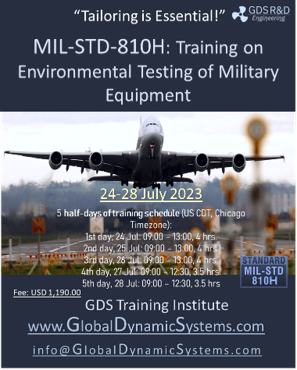
Training on MIL-STD-810H Environmental Testing (5 days, United States Central Day Time) by GDS Engineering R&D, Inc. Dr. Ismail Cicek is the main instructor and the training is supported by associate instructors with test setup and test demonstrations.
5 days of training schedule (US Central DayTime, CDT) is as follows (UTC-5):
1st day, 24 Jul: 09:00 – 13:00, 4 hrs. (UTC-5)
2nd day, 25 Jul: 09:00 – 13:00, 4 hrs. (UTC-5)
3rd day, 26 Jul: 09:00 – 13:00, 4 hrs. (UTC-5)
4th day, 27 Jul: 09:00 – 12:30, 3.5 hrs. (UTC-5)
5th day, 28 Jul: 09:00 – 12:30, 3.5 hrs (UTC-5)
GDS Engineering R&D, Inc. provides online international training on MIL-STD-810H Environmental qualification testing of military equipment. Training focuses on the standard with tailoring examples. This training is an important step for testing and certifying your military equipment and products in accordance with MIL-STD-810H, platform test requirements, and other applicable standards and specifications.
This page describes the contents of this two and half days of short training.program.You can also download the PDF file that describes the MIL-STD-810H training program. Click here to download the MIL-STD-810H Training Program Description Document. Dr Cicek is the main instructor of this training. Click here to read his bio page.
Platform and equipment test examples are provided in each test method presentations and discussions, including:
A Group Training Might be a Good Option for your Organization?
The main instructor of the training is Dr Ismail Cicek. An Avionics Chief Engineer (EE) who is also a Certified Verification Engineer (FAA/EASA) also assists the trainings. Our experienced test personnel also becomes avialable for demonstrations and discussions.
A Certified Verification Engineer (CVE) iaw FAA/EASA and with 18 years of experience. He has worked as the avionics systems chief engineer in product development of avionics systems. He is also experienced in the product testing per environmental and EMI/EMC standards and FAA/EASA certification processes.
Our experienced personnel also support our training programs. They are actively participating in the environmental testing of products.
Dr. Ismail Cicek studied PhD in Mechanical Engineering Department at Texas Tech University in Texas, USA. He study included random vibration. He has both industrial and academic experience for over 30 years.
He gained engineering and leadership experience by working in the United States Department of Defence projects and programs as systems development engineer for 15 years. He led the development of various engineering systems for platforms including C-5, C-17, KC-10, KC-135, and C-130 E/H/J. Dr. Cicek’s experience includes unmanned aerial vehicle development where he utilized the Geographical Information Systems (GIS) and Malfunction Data Recorder Analysis Recorder System (MADARS) development for military transport aircraft.
Dr Cicek worked as the lab chief engineer for five years at the US Air Force Aeromedical Test Lab at WPAFB, OH. He received many important awards at the positions he served, due to the excellent team-work and his detail oriented and energetic personality. These included Terra Health’s Superior Client Award in 2009 and Engineering Excellence Award in 2010 as well as an appreciation letter from the US Air Force Aeronautical Systems Center (ASC), signed by the commander in charge.
Dr Cicek also established a test lab, called Marine Equipment Test Center (METC) and located at Istanbul Technical University, Tuzla Campus, for testing of equipment per military and civilian standards, such as RTCA-DO-160. Providing engineering, consultancy, and training services to many companies and organizations, Dr. Cicek has gained a great insight into the tailoring of standard test methods in accordance with military standards, guides, and handbooks as well as Life Cycle Environmental Profile LCEP) developed for the equipment under test.
Dr. Cicek also completed various product and research projects, funded in the USA, EU, and Turkey. He is currently teaching at Istanbul Technical University Maritime Faculty, Tuzla/Istanbul. He is the founding manager of the METC in Tuzla Campus of ITU. Meanwhile, he provided engineering services, consultancies, and training to many organizations for product development, engineering research studies such a algorith development, test requirements development, and test plans and executions.
Dr Cicek worked as the Principle Investigator and became a Subject Matter Expert (SME) at the US Air Force Aeromedical Test Lab (WPAFB/OH) for certifying the products to the US Air Force Platform Requirements. He also developed Joint Enroute Care Equipment Test Standard (JECETS) in close work with US Army Test Lab engineers and managers.
Read DAU Paper: “A New Process for the Acceleration Test and Evaluation of Aeromedical Equipment for U.S. Air Force Safe-To-Fly Certification”. Click to display this report.
Connect with Dr Ismail Cicek: Linkedin Page
Click here to read more about Dr Cicek’s professional studies.
To register for a course, do the following:
Individual/Group Registrations:
Training class size is limited with 12 attendees. Please ensure to reserve your seat with the following actions:
1. Review the Training Calendar and select the suitable training for you or for your organization.
2. Fill out the Training Registration Request Form, below this page. We will send you the registration package, via email, including:
Organizational (Closed) Trainings:
Please fill out the Training Registration Request Form, below this page. Ensure to describe
April 30 @ 8:00 am – May 2 @ 12:00 pm
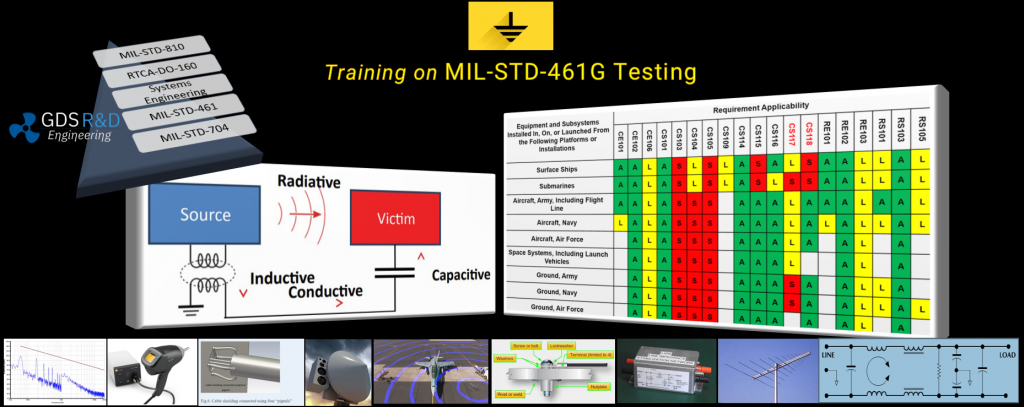
Including the overview of the relevant EMI/EMC test standards: MIL-STD-464, MIL-STD-704, MIL-STD-1275, and RTCA-DO-160G Power Input.
Training Type: International / Online
Satus: OPEN
Date: 30 April – 2 May, 2025 | Timezone: EST (European Standart Time) UTC+1.
Time: Day1/2: 08:30 – 16:30, Day 3: 08:00 – 12:00.
Click here to read all details about MIL-STD-461G training with detailed contents)
2.5 days of training covers the following topics:
All MIL-STD-461G test sections are discussed and explained in detail, including
The main instructor of the training is Dr Ismail Cicek. An Avionics Chief Engineer (EE) who is also a Certified Verification Engineer (FAA/EASA) also assists the trainings. Our experienced test personnel also becomes avialable for demonstrations and discussions.
A Certified Verification Engineer (CVE) iaw FAA/EASA and with 18 years of experience. He has worked as the avionics systems chief engineer in product development of avionics systems. He is also experienced in the product testing per environmental and EMI/EMC standards and FAA/EASA certification processes.
Our experienced personnel also support our training programs. They are actively participating in the environmental testing of products.
We provide both face-to-face and online training programs. For registration to a course or custom training requests for your organization, please get in touch with us.
To secure your spot in our training class, please send an email including your full name, your affiliated organization, contact information, and the name and date of the training you wish to attend. We look forward to having you!
| US Offices: | GDS Global Office (EU/TR): |
|---|---|
| Dayton, OH. | Mountainview, CA Ph. +1 (937) 912-1220 | ITU ARI Teknokent | GTU Teknopark Ph. +90 546 934 95 99 |
March 17, 2023 @ 8:00 am – March 19, 2023 @ 12:00 pm
Training Content Details: Click to Display RTCA-DO-160 Training Contents Page
The main instructor of the training is Dr Ismail Cicek. An Avionics Chief Engineer (EE) who is also a Certified Verification Engineer (FAA/EASA) also assists the trainings. Our experienced test personnel also becomes avialable for demonstrations and discussions.
A Certified Verification Engineer (CVE) iaw FAA/EASA and with 18 years of experience. He has worked as the avionics systems chief engineer in product development of avionics systems. He is also experienced in the product testing per environmental and EMI/EMC standards and FAA/EASA certification processes.
Our experienced personnel also support our training programs. They are actively participating in the environmental testing of products.
Dr. Ismail Cicek studied PhD in Mechanical Engineering Department at Texas Tech University in Texas, USA. He study included random vibration. He has both industrial and academic experience for over 30 years.
He gained engineering and leadership experience by working in the United States Department of Defence projects and programs as systems development engineer for 15 years. He led the development of various engineering systems for platforms including C-5, C-17, KC-10, KC-135, and C-130 E/H/J. Dr. Cicek’s experience includes unmanned aerial vehicle development where he utilized the Geographical Information Systems (GIS) and Malfunction Data Recorder Analysis Recorder System (MADARS) development for military transport aircraft.
Dr Cicek worked as the lab chief engineer for five years at the US Air Force Aeromedical Test Lab at WPAFB, OH. He received many important awards at the positions he served, due to the excellent team-work and his detail oriented and energetic personality. These included Terra Health’s Superior Client Award in 2009 and Engineering Excellence Award in 2010 as well as an appreciation letter from the US Air Force Aeronautical Systems Center (ASC), signed by the commander in charge.
Dr Cicek also established a test lab, called Marine Equipment Test Center (METC) and located at Istanbul Technical University, Tuzla Campus, for testing of equipment per military and civilian standards, such as RTCA-DO-160. Providing engineering, consultancy, and training services to many companies and organizations, Dr. Cicek has gained a great insight into the tailoring of standard test methods in accordance with military standards, guides, and handbooks as well as Life Cycle Environmental Profile LCEP) developed for the equipment under test.
Dr. Cicek also completed various product and research projects, funded in the USA, EU, and Turkey. He is currently teaching at Istanbul Technical University Maritime Faculty, Tuzla/Istanbul. He is the founding manager of the METC in Tuzla Campus of ITU. Meanwhile, he provided engineering services, consultancies, and training to many organizations for product development, engineering research studies such a algorith development, test requirements development, and test plans and executions.
Dr Cicek worked as the Principle Investigator and became a Subject Matter Expert (SME) at the US Air Force Aeromedical Test Lab (WPAFB/OH) for certifying the products to the US Air Force Platform Requirements. He also developed Joint Enroute Care Equipment Test Standard (JECETS) in close work with US Army Test Lab engineers and managers.
Read DAU Paper: “A New Process for the Acceleration Test and Evaluation of Aeromedical Equipment for U.S. Air Force Safe-To-Fly Certification”. Click to display this report.
Connect with Dr Ismail Cicek: Linkedin Page
Click here to read more about Dr Cicek’s professional studies.
Please fill out the following form for asking your question or with a registration request. Thank you for your interest in our training programs.
[contact-form-7 id=”7c573b2″ title=”Training Request Form 1″]