Organized by TRTEST Test ve Değerlendirme A.Ş., Ankara, Turkey.
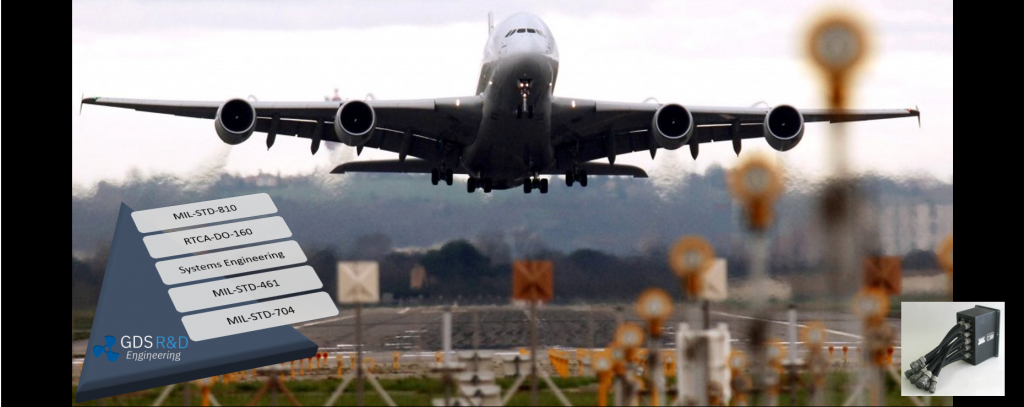
Electrical/Electronic systems for US DoD aircraft must comply with MIL-STD-704F, the latest version of the standard. Equipment must pass this comprehensive testing to demonstrate compliance.
We provide a 2 day online training course with two experienced instructors on the subject.
We can open the course as an online and closed course or you can simply join to one of our upcoming training events.
February 11, 2022
@
8:00 am
–
February 13, 2022
@
12:30 pm CET
Cost: USD760.00
GDS Engineering R&D, Inc. is an official member of the RTCA Organization.
RTCA-DO-160G Online Training, FAA/EASA Equipment Test Requirements. This training is an important step for testing and certifying your products in accordance with the FAA/EASA test requirements.
2.5 Days,Hands-on, “Online” or “Onsite” Training Class. Led by live, two instructors.
This training is an important step for testing and certifying your products in accordance with the FAA/EASA test requirements.
A good understanding of product testing in view of RTCA-DO-160G
Overview of Systems Engineering, V&V, and Concepts of Operations (CONOPS) document and relations with RTCA-DO-160 testing
Part 21 and FAA/EASA Regulations
Test Requirement Reference
Test Category Selections
Test Procedures, Scheduling, Test Implementation and Review of Test Reports
Test Sections (Environmental & EMI/EMC): All test sections are covered with detail discussions except several tests, such as Fungus Tesing and Waterproofness are discussed in summary with important aspects.
Discussions include design issues, test failures, and recommendations
A session with Risk Management Method includes how to resolve a test result that may not be a failure, i.e. anomalies., with a process that we recommend.
Importance of establishing Integrated Product Team (IPT) or with another name “Test Review Team” for reviewing test plans and results and identifying the next step when issues are encountered.
Design Recommendations are emphasized in each test section.
Additional or alternative (standards and tests) are recommended for certain cases.
Our Instructors share their experience and knowledge gained by working long years in the field with designing products and performing tests in accordance with such as RTCA-DO-160, MIL-STD-810, and MIL-STD-461. The slides are supported by many graphics and test videos for the efficiency and clarity of the information and each session is planned in accordance with the sections in RTCA-DO-160G.
About the Instructors
The main instructor of the training is Dr Ismail Cicek. An Avionics Chief Engineer (EE) who is also a Certified Verification Engineer (FAA/EASA) also assists the trainings. Our experienced test personnel also becomes avialable for demonstrations and discussions.
A Certified Verification Engineer (CVE) iaw FAA/EASA and with 18 years of experience. He has worked as the avionics systems chief engineer in product development of avionics systems. He is also experienced in the product testing per environmental and EMI/EMC standards and FAA/EASA certification processes.
Our experienced personnel also support our training programs. They are actively participating in the environmental testing of products.
Dr. Ismail Cicek studied PhD in Mechanical Engineering Department at Texas Tech University in Texas, USA. He study included random vibration. He has both industrial and academic experience for over 30 years.
He gained engineering and leadership experience by working in the United States Department of Defence projects and programs as systems development engineer for 15 years. He led the development of various engineering systems for platforms including C-5, C-17, KC-10, KC-135, and C-130 E/H/J. Dr. Cicek’s experience includes unmanned aerial vehicle development where he utilized the Geographical Information Systems (GIS) and Malfunction Data Recorder Analysis Recorder System (MADARS) development for military transport aircraft.
Dr Cicek worked as the lab chief engineer for five years at the US Air Force Aeromedical Test Lab at WPAFB, OH. He received many important awards at the positions he served, due to the excellent team-work and his detail oriented and energetic personality. These included Terra Health’s Superior Client Award in 2009 and Engineering Excellence Award in 2010 as well as an appreciation letter from the US Air Force Aeronautical Systems Center (ASC), signed by the commander in charge.
Dr Cicek also established a test lab, called Marine Equipment Test Center (METC) and located at Istanbul Technical University, Tuzla Campus, for testing of equipment per military and civilian standards, such as RTCA-DO-160. Providing engineering, consultancy, and training services to many companies and organizations, Dr. Cicek has gained a great insight into the tailoring of standard test methods in accordance with military standards, guides, and handbooks as well as Life Cycle Environmental Profile LCEP) developed for the equipment under test.
Dr. Cicek also completed various product and research projects, funded in the USA, EU, and Turkey. He is currently teaching at Istanbul Technical University Maritime Faculty, Tuzla/Istanbul. He is the founding manager of the METC in Tuzla Campus of ITU. Meanwhile, he provided engineering services, consultancies, and training to many organizations for product development, engineering research studies such a algorith development, test requirements development, and test plans and executions.
Dr Cicek worked as the Principle Investigator and became a Subject Matter Expert (SME) at the US Air Force Aeromedical Test Lab (WPAFB/OH) for certifying the products to the US Air Force Platform Requirements. He also developed Joint Enroute Care Equipment Test Standard (JECETS) in close work with US Army Test Lab engineers and managers.
Read DAU Paper: “A New Process for the Acceleration Test and Evaluation of Aeromedical Equipment for U.S. Air Force Safe-To-Fly Certification”. Click to display this report.
Turkish Journal of Maritime and Marine Sciences, Vol: 5 No: 2 (2019) 141-170.
Authors
Orhan Gönel and İsmail Çiçek
Abstract
Flag states must issue their maritime investigation reports in accordance with the International Maritime Organization (IMO) circulars with the inclusion of ‘lessons learned’ items from recorded accidents or incidents. To identify the root cause of an event, there must be enough detail of information about the investigated event presented in reports. The information included in reports may help identifying the procedural deficiencies or technical challenges. Considering the Man-Over- Board (MOB) events as a sub group of maritime accident nvestigations, authors systematically reviewed over 100 reports containing MOB events in this study.
In this study, reports are reviewed and major differences in formats as well as level and type of information are recorded. A systematic methodology for reviewing and reporting the overall information retrieved from maritime accident reports is presented. To cover all information from reviewed reports, 113 information items are identified. An associated standard form is developed for use in extracting information from all investigation reports. Enabling the data collected systematically from reports, issued by the world maritime accident reporting states and agencies, and successively populated into a database for overall analysis, this form is called “Maritime MOB Events Investigation Form (MEI Form)”. This paper presents the content of the MEI Form and demonstrates the methodology of use for retrieving, formatting and analyzing the information from the MOB investigation reports using case examples.
In short, “GDS” develops simulator products for maritime education and training and provides Systems Engineering training courses in defense and aviation.
About Simulators
Especially for use in maritime training, GDS has developed a Ship Engine Room Simulator (SERS) and supports it as the main product, along with similar simulators. The main product of GDS, Ship Engine Room Simulator (SERS™), has been trademarked and certified by ClassNK, an international maritime certification agency. SERS has started to be used in important maritime education institutions such as Yıldız Technical University, OneYachts (Malta), and Istanbul Technical University (ITU) Maritime Faculty. In addition to SERS, GDS has developed other maritime training simulators, such as the Ship Electrical Systems Simulator,r and continues its work.
GDS also provides project-specific, knowledge—and experience-based consultancy services in the maritime sector. The TÜBİTAK project of ARKAS BIMAR and the study on Machine Learning are ongoing. He has conducted a study on the measurement and analysis of noise emitted into the sea for a ship belonging to Karadeniz Holding (Karpowership) and an internationally valid report study. Our services to the maritime sector continue with similar engineering and consultancy studies.
About Systems Engineering Training Programs
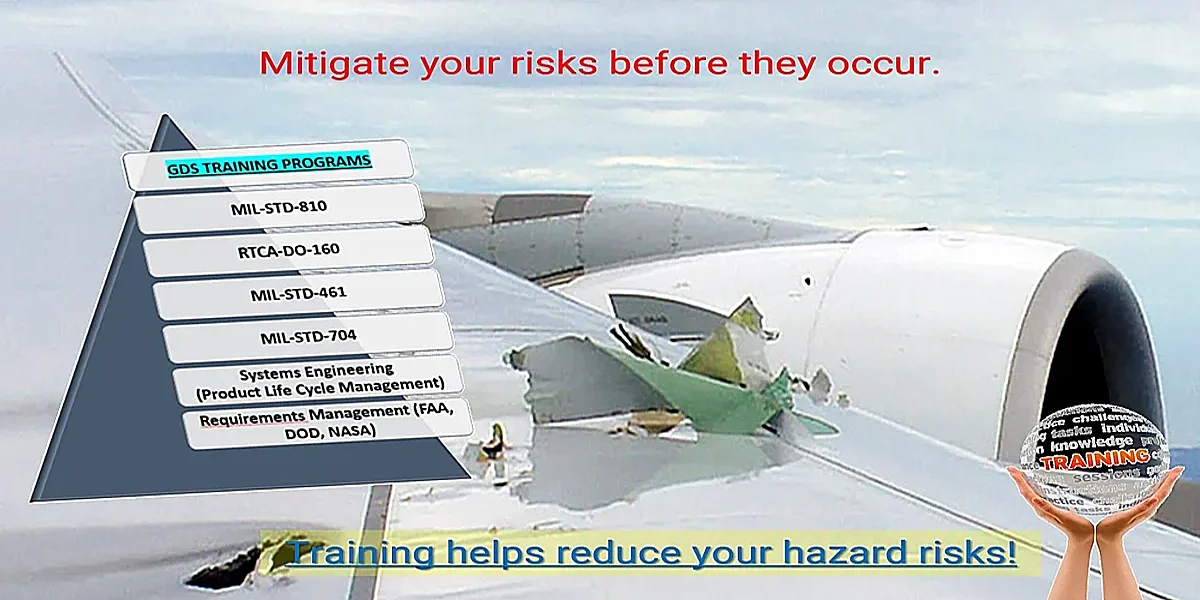
GDS personnel for the Aviation Sector provide training on the RTCA-DO-160G Environmental Test Standard and provide services on test plans and test management according to this standard.
With vast experience and expertise in defense systems development and certification in the USA, GDS also provides MIL-STD-810H training, which is very important in the Defense Sector. So far, GDS provided training to more than 1000 individuals and over 150 organizations globally.
GDS Personnel
GDS personnel also consist of academic staff at ITU Maritime Faculty and provide testing, consultancy, and engineering services within the scope of university-industry collaborations at ITU Maritime Test Application and Research Center (ITU DETAM). The ITU Marine Equipment Test Center (METC), known in English, can perform environmental tests such as vibration, temperature, icing, dropping, stacking, internal pressure, pulling, notch, sealing, and salt fog.
GDS is led by Dr Ismail Cicek, who has more than 30 years of experience in the Maritime Education and Training, Defense, and Aviation sectors.
GDS continues to contribute to global studies with its products and knowledge-experience potential.
Acceleration, as addressed in MIL-STD-810G Method 513.6 (Department of Defense, 2009), is a load factor (inertial load or “g” load) that is applied slowly enough and held steady for a period of time such that the materiel has sufficient time to fully distribute the resulting internal loads to all critical joints and components.
The common methods used to expose equipment to a sustained acceleration load are centrifuge and track/rocket-powered-sled testing.
However, both methods impose limitations on AE equipment testing. For example, the costs required and the scheduling, planning, and coordination phases associated with the use of these types of test facilities are often prohibitive. In some cases, centrifuges and track/rocket sleds may limit the orientations at which the test article can be mounted for testing. To maintain validity, all AE devices are tested under the same mounting configuration as intended for operational use. Finally, due to the often expensive and delicate nature of medical devices, insufficient inventories often prevent the use of these tests due to their somewhat destructive nature.
Because of the difficulties associated with physical dynamic testing, the ATB team initially turned to Finite Element Analysis (FEA) as the method of choice for meeting acceleration test requirements.
Recent technological advances in microcomputing and higher resolution graphics capabilities allowed complex systems to be modeled and simulated for both static and dynamic tests.
The FEA techniques were already used by others for various aircraft structures and devices. For example, Foster and Sarwade (2005) performed an FEA of a structure that attached medical devices to a litter. This structure was later approved as STF. Continuing on the same theme, Lawrence, Fasanella, Tabiei, Brinkley, and Shemwell (2008) studied a crash test dummy model for NASA’s Orion crew module landings using FEA. Viisoreanu, Rutman, and Cassatt (1999) reported their findings for the analysis of the aircraft cargo net barrier using FEA. Furthermore, Motevalli and Noureddine (1998) used an FEA model of a fuselage section to simulate the aircraft cabin environment in air turbulence. These and similar studies demonstrated the successful use of the FEA method to verify requirements by analysis for an acceleration test.
Given the costs associated with dynamic testing, the ATB originally envisioned using the FEA method to alleviate budget and inventory concerns. To test this theory, the ATB employed FEA for testing various AE structures to meet the acceleration requirements and found some aspects of this method to be cost- and time-prohibitive.
Lessons learned from these studies are provided in the case-studies section. The various types of analysis and test methods raise questions as to what the correct decision process is for selecting the most appropriate method for STF testing of AE equipment.
The authors of this article describe the process developed and employed by the ATB for the acceleration testing of AE equipment since June 2008.
The ATB’s process has proven to be well suited for identifying the most appropriate test method—one that not only represents the most appropriate and effective test method, but also minimizes the use of available resources. This process includes testing both structurally simple and complex equipment and successfully introducing the use of the Equivalent Load Testing (ELT) method, which permits the use of alternative testing approaches, such as pull testing and tensile testing.
GDS Systems Engineering V&V Training Courses Event Calendar
We announce upcoming training on these pages. Due to COVID-19 pandemic situation, we offer only ONLINE training courses for the time being. Please communicate with us if you need a group training, which could be scheduled based on your plans and schedules.
Select the best training from below list that fits to your training needs.
Ship Engine Room Simulator (Ship ERS or SERS™) is certified to meet both IMO STCW 2010and IMO Model Course 2.07 Exercise Requirements
SERS™ User Manuals
SERS™ is provided with a total of seven (7) user manuals, student exercise workbooks, and documents as complementary to the training practices. All these documents are supplied with a license purchase. Using the SERS™ document set in classroom study also promotes the real-world engine room best work practices of using manuals in operation and management of the engine room machinary and systems.
SERS User Manual Vol I (Software Description) describes the SERS software with the SERS Graphical User Interface (GUI) Panels accessed from the SERS Main Graphical User Interface (GUI) Panel.
SERS User Manual Volume II (Engine Room Operations) includes the operational instructions on how to operate the engine room systems and machinery using the SERS. The training institutions can directly use the contents of this manual in their training procedures. There are also exercises included for use by the trainees for reporting.
SERS User Manual Vol III (Installation & Configuration) describes the installation and the configuration of the software and hardware items. Using this manual, SERS can be configured to run as a Distributed System and the touch screen hardware panels can be assigned to desired GUI panels using the configuration files.
SERS User Manual Volume IV (Instructor’s Manual) includes guides, information, and additional exercise tips for the instructors to utilize SERS in their trainings according to a specific training objective.
Student Exercise Workbooks per IMO Model Course 2.07
Student Exercise Workbook, Volume I: We are already using the simulator in our own training programs and developed Volume I with exercies that meets each objectives of the IMO Model Course 2.07. Volume I exercises includes the Engine Room Operational Level training objectives.
Student Exercise Workbook,Volume II: Volume II exercises includes the Engine Room Management Level training objectives in accordance with IMO Model Course 2.07.
SERS Philosophy Document provides how SERS may be used in a curricula or in engine room simulator training programs. It provides guides for selecting the configuration of the SERS according to the training objectives.
Students can Complete and Report the IMO Model Course 2.07 Exercises with Online Training
IMO Model Course Engine-Room Simulator 2.07 (2017 Edition)
Operation of plant machinery 2.1. Operational procedures 2.2 Operate main and auxiliary machinery and systems 2.3. Operation of diesel generator 20 2.4. Operation of steam boiler 2.5. Operation of main engine and associated auxiliaries 2.6. Operation of steam turbo generator 2.7. Operation of fresh water generator 2.8. Operation of pumping system 2.9. Operation of oily water separator 2.10. Fault detection and measures
Maintain a safe engineering watch 19 3.1. Thorough knowledge of principles to be observed in keeping an engineering watch 3.2. Safety and emergency procedures; changeover of remote/automatic to local control of all systems 3.3. Safety precautions to be observed during a watch and immediate actions to be taken in the event of fire or accident, with particular reference to oil systems 3.4. Knowledge of engine room resource management principles
Operate electrical, electronic and control systems 4.1. Operation of main switch board 4.2. High-voltage installations