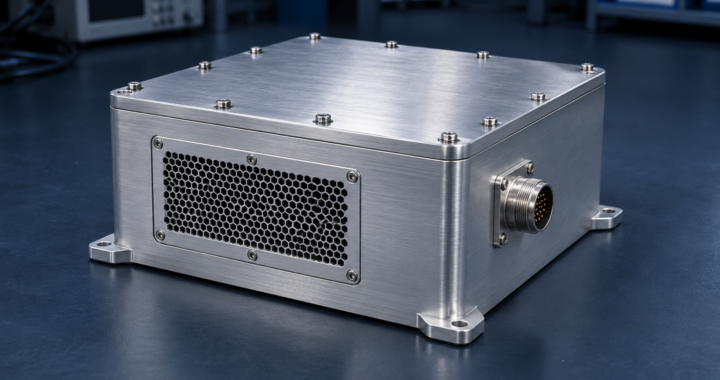
The wall of a metal enclosure may offer substantial shielding while interference still couples through the door joint or connector plate. Before specifying a material or gasket, draw the shielding boundary and mark every place where it is interrupted. That includes unused cutouts and removable panels.
What the GDS guide covers
The guide starts with the installation, the frequency range and the shielding performance the equipment needs. It then works through shell materials and finishes, lid and door joints, ventilation, power entry and cable shield termination. A separate section covers low-frequency magnetic fields, where material and geometry choices can differ from those used for RF shielding.
A worked example follows a ventilated metal enclosure from the initial layout to the checks needed for release. It shows how to screen an opening, assess a candidate vent and identify where measurements are needed. The design review worksheet gives teams a place to record each interface, its proposed treatment and the evidence required to close it.
Which configuration are you measuring?
A material sample, an empty enclosure and an operating product answer different questions. Record which configuration the data describe and verify the final equipment with its representative cables, loads and operating modes.
Download the GDS Metal Enclosure Design Guide (PDF)
GDS EMI/EMC Training
MIL-STD-461G EMI/EMC Testing covers emissions and susceptibility testing of military equipment.
RTCA-DO-160G Environmental Testing covers environmental and EMI/EMC testing of airborne equipment.